PHOTO
"In agriculture perception matters as much as reality. Even the perception of contamination can close markets," said farmer Sharon Woods who led Saturday's Parkes Farmers March Against the Incinerator.
"We already operate under strict traceability requirements so what happens when a major waste incinerator operates nearby?"
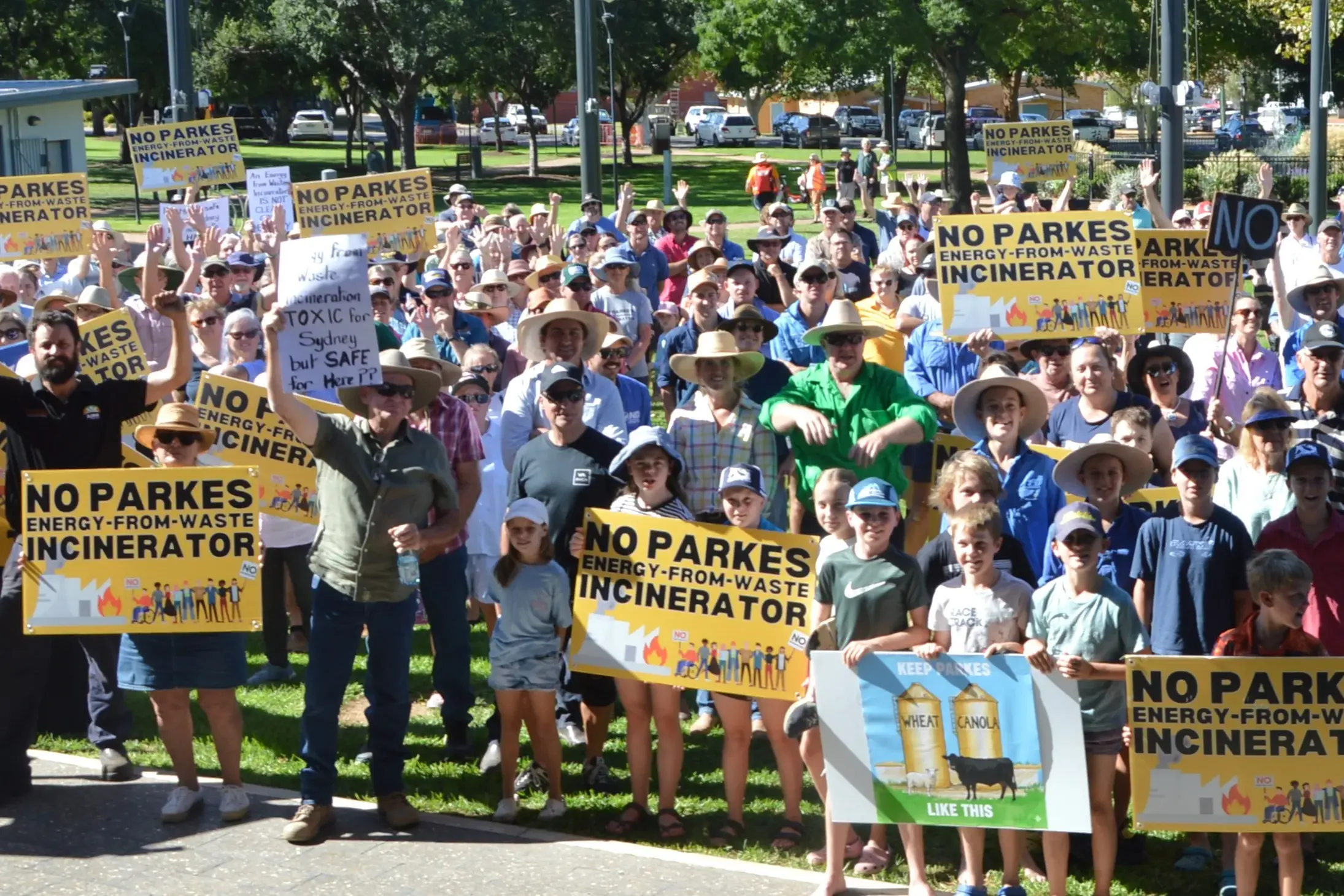
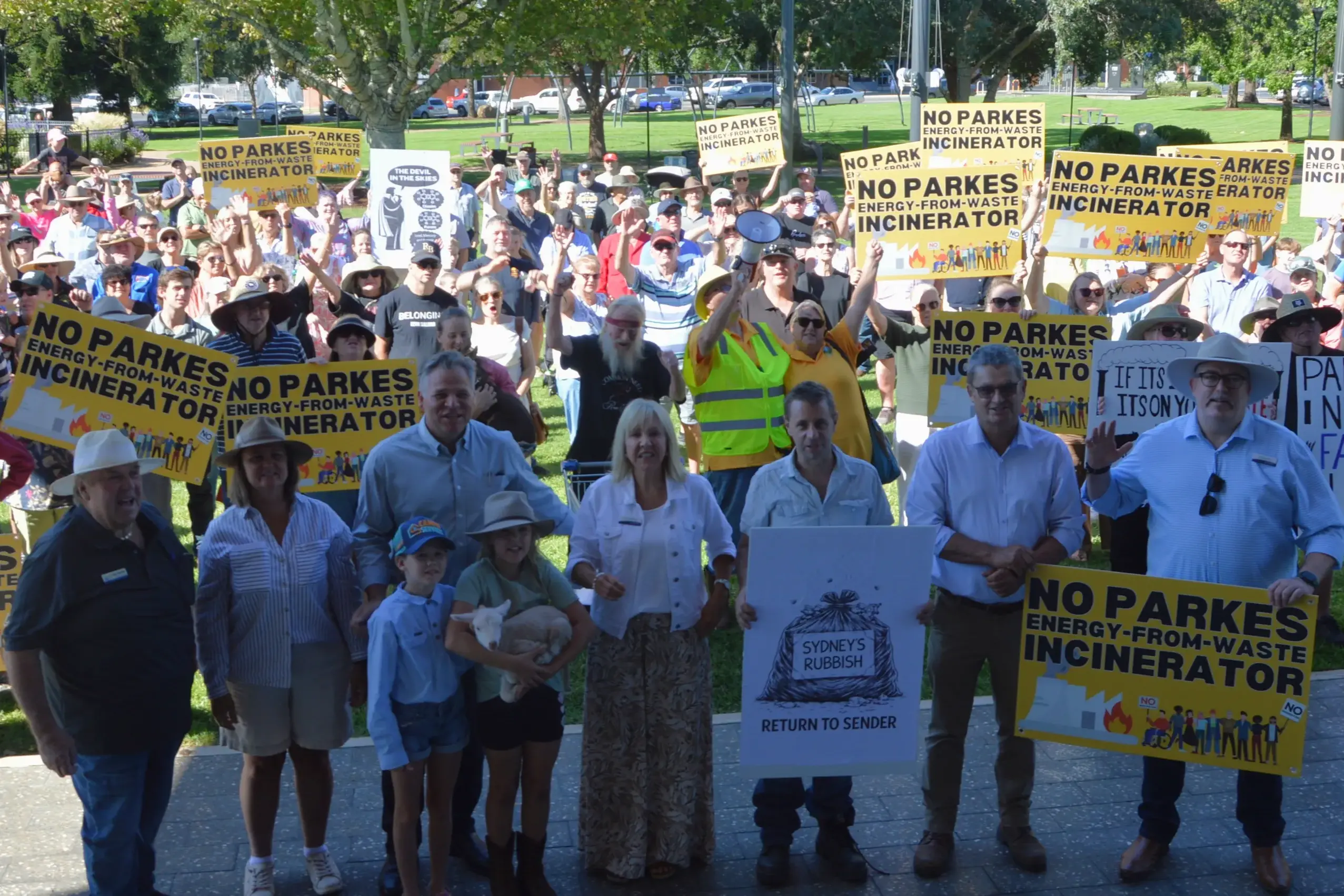
Sharon was one of four speakers to address a crowd of hundreds who marched from the Henry Parkes statue in Clarinda Street and gathered in Cooke Park to express their strong opposition to the proposed energy from waste facility earmarked for the Parkes Special Activation Precinct.
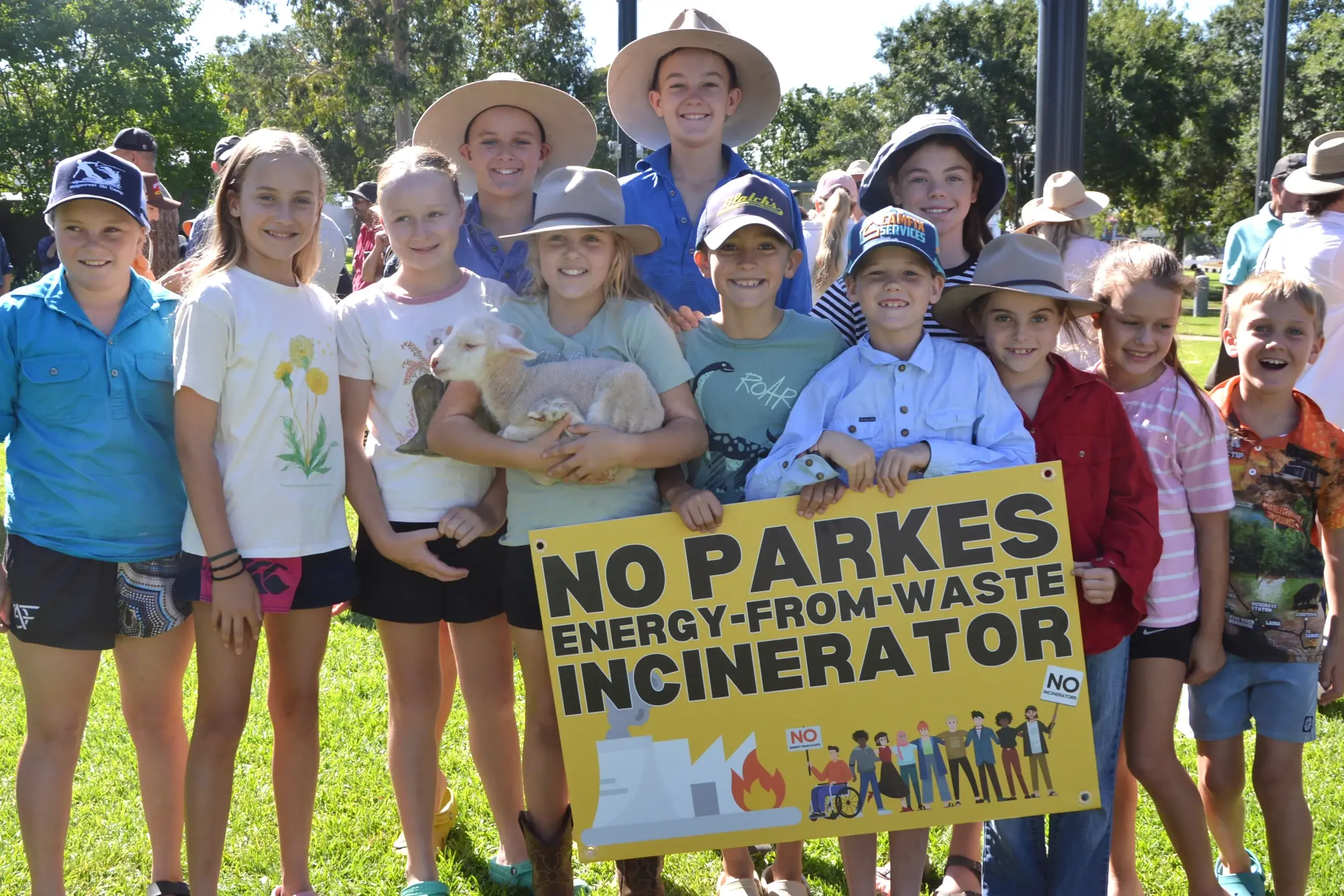
Sharon who was raised on her family's property as a third-generation farmer, now farms at Cooks Myalls with her husband Glen, a fifth-generation farmer, and their children - their family's connection to the land dates back to 1876.
"This land is not just our business. It is our home. It is our history and it is our children's future," Sharon said.
The proposed facility would burn an estimated 700,000 tonnes of red bin waste each year.
Sharon questioned why such developments are restricted in metropolitan areas yet permitted in regional communities.
"Energy from waste incinerators are banned in the ACT and across much of Greater Sydney, allowed only in four regional areas.
"If they are not considered safe for major population centres, they are not safe for our communities either. Protection should not depend on postcode."
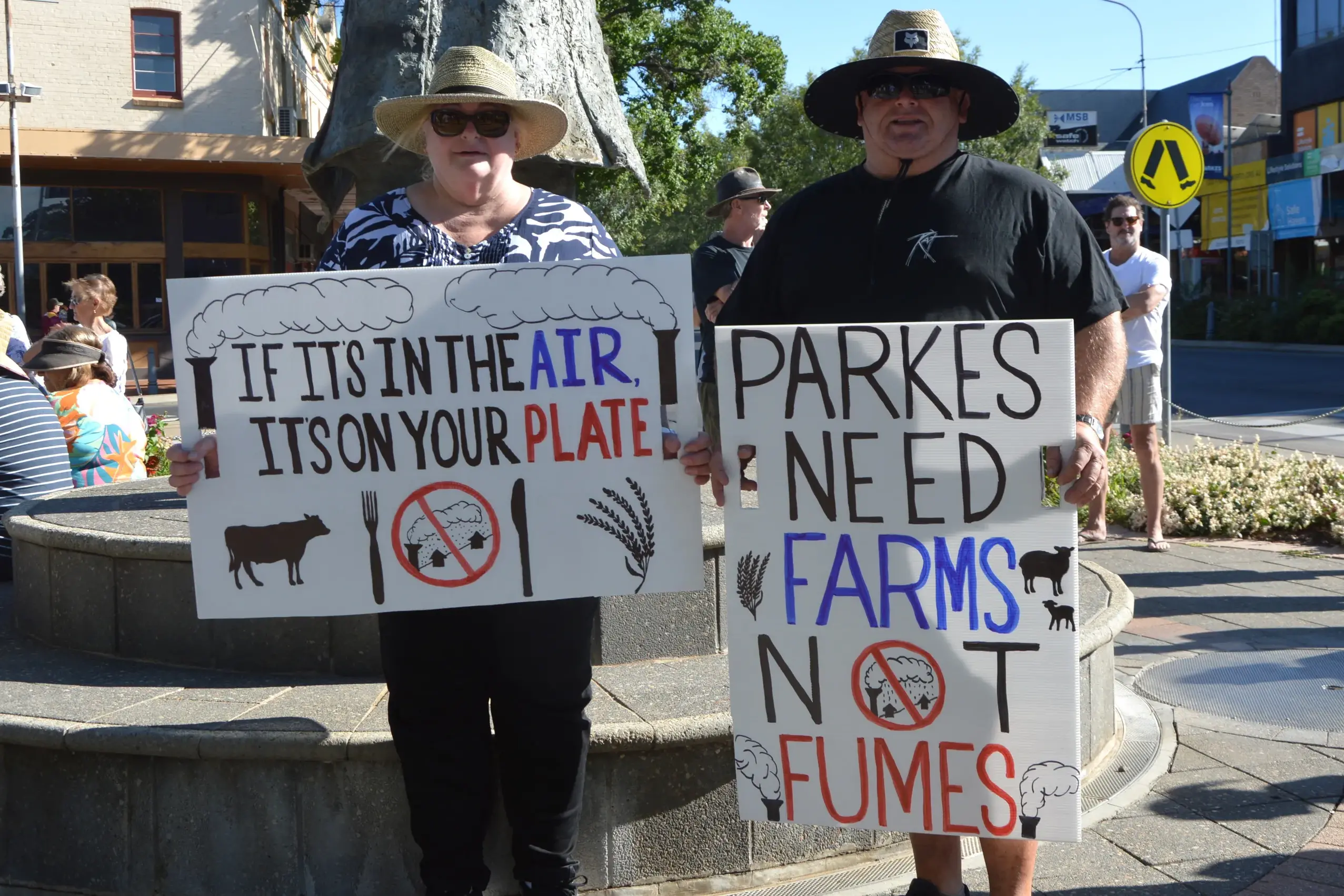
She warned that even the perception of contamination could threaten Parkes' standing as a key grain and livestock producing region.
"Our livelihood depends entirely on the health of our soil, our water and our reputation," she said.
"Once market confidence is damaged, it is incredibly difficult to restore."
Member for Orange Phil Donato who joined the march on Saturday spoke to the crowd about his extensive research into the proposed facility, including visiting a similar energy from waste facility in Kwinana, Western Australia which formed his stance on the proposed facility for Parkes.
"The facility is located in a long-established heavy industrial area," Mr Donato said when talking about the Kwinana energy from waste facility.
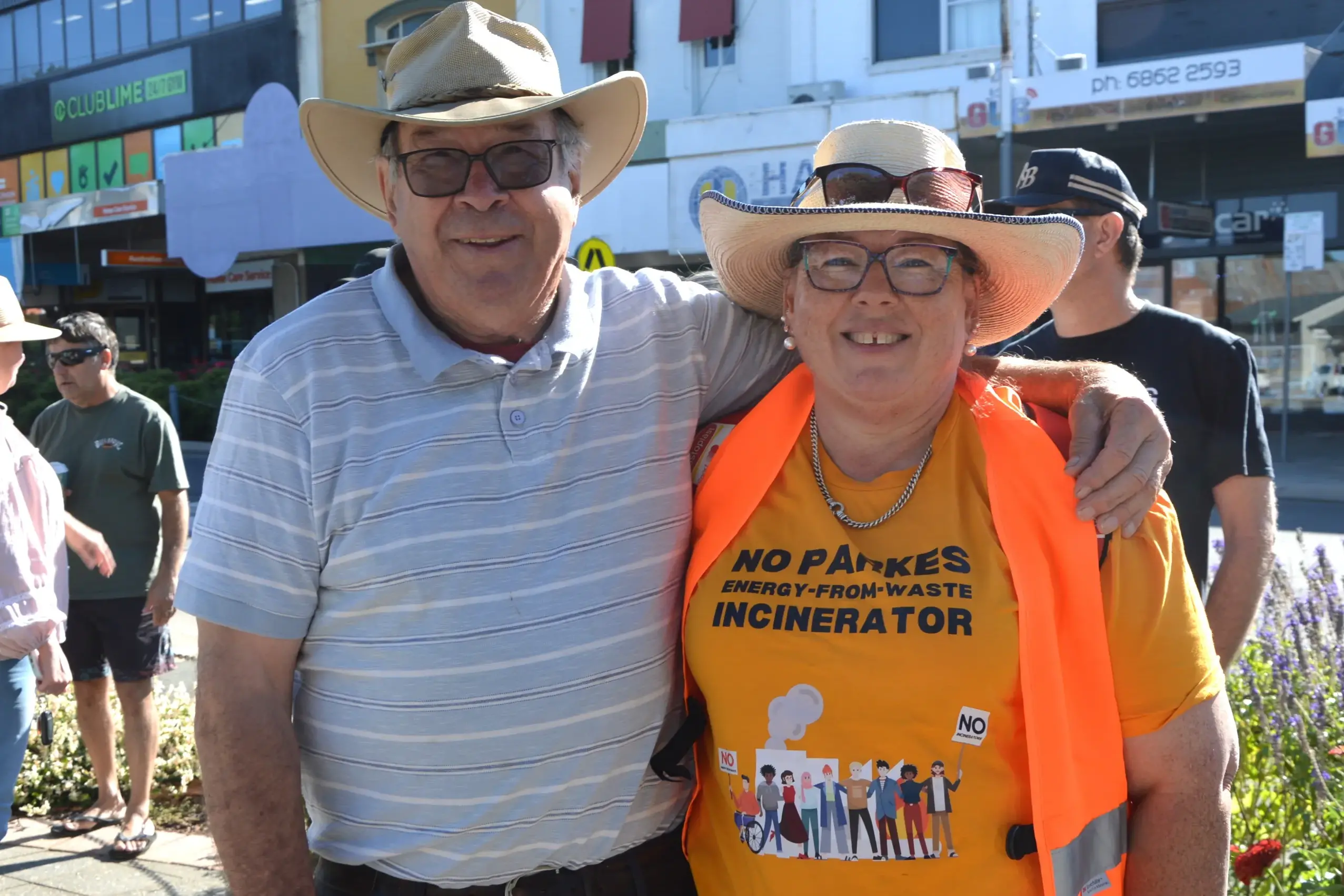
"It's not a greenfield site in prime agricultural land and it's not adjoining generational farming families."
Mr Donato spoke about previous parliamentary inquiries into similar proposals which highlighted concerns about long-term environmental and health impacts.
"We don't have a crystal ball but it's fair to say this won't improve our environment.
"We've got limited agricultural prime land in this country. We shouldn't be jeopardising it."
Donato confirmed he had raised the community's concerns with the Premier and relevant ministers, and would continue to advocate against the project.
Travelling from Moree, Vice President of NSW Farmers Rebecca Reardon joined Parkes farmers to stand against the proposed facility.
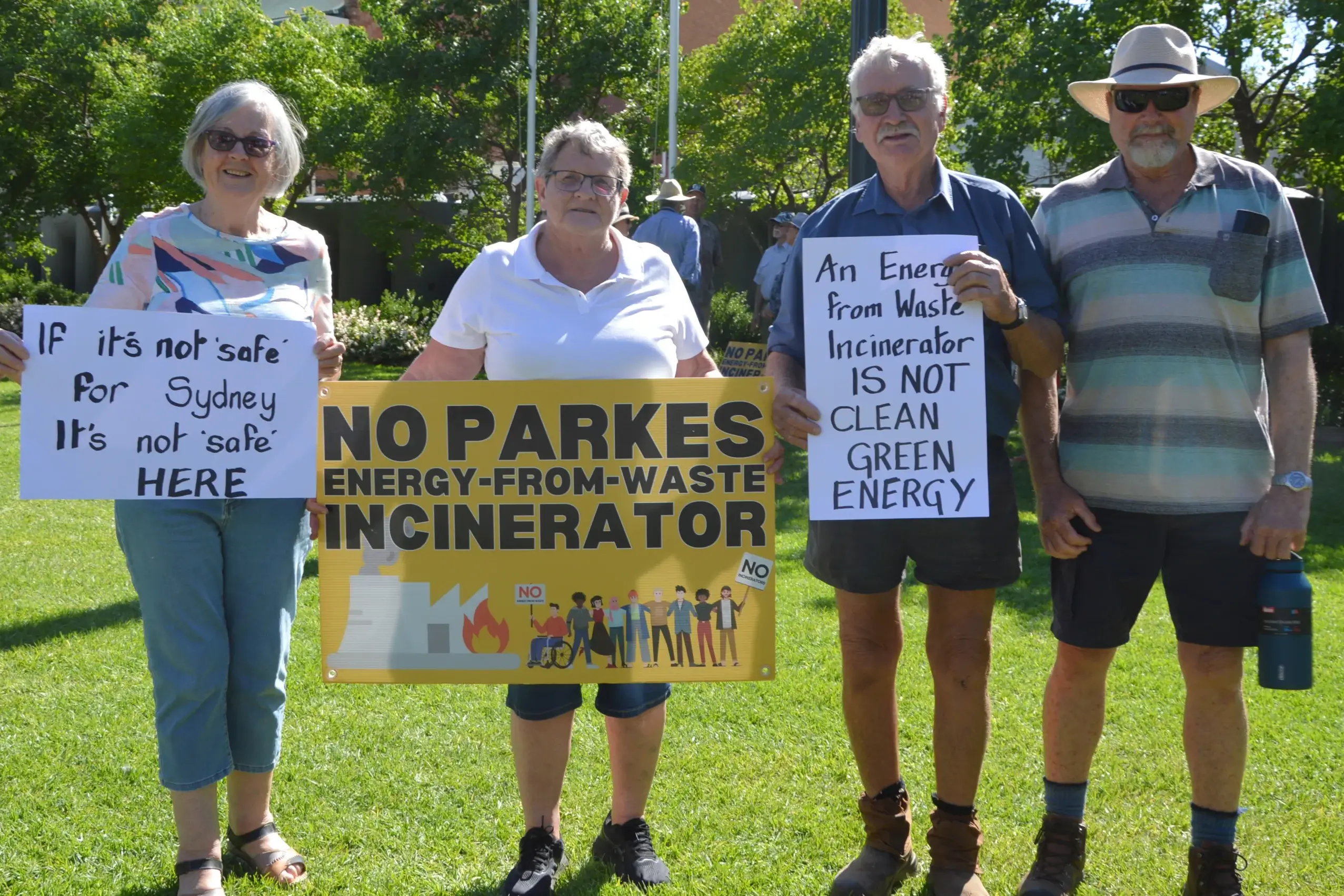
Rebecca addressed the rally arguing rural communities should not become a solution to Sydney's waste problem.
"Sydney creates the bulk of NSW's rubbish, and they've got a problem," Rebecca said.
"But rural communities should never be forced to take Sydney's waste if they don't want it."
Rebecca too questioned why similar facilities have been rejected in Western Sydney but were now proposed for regional areas.
"If it's so safe, if it's not going to fill the air with toxic emissions and it's not going to create the stench of garbage, then why don't they just put the incinerators where the waste is created?
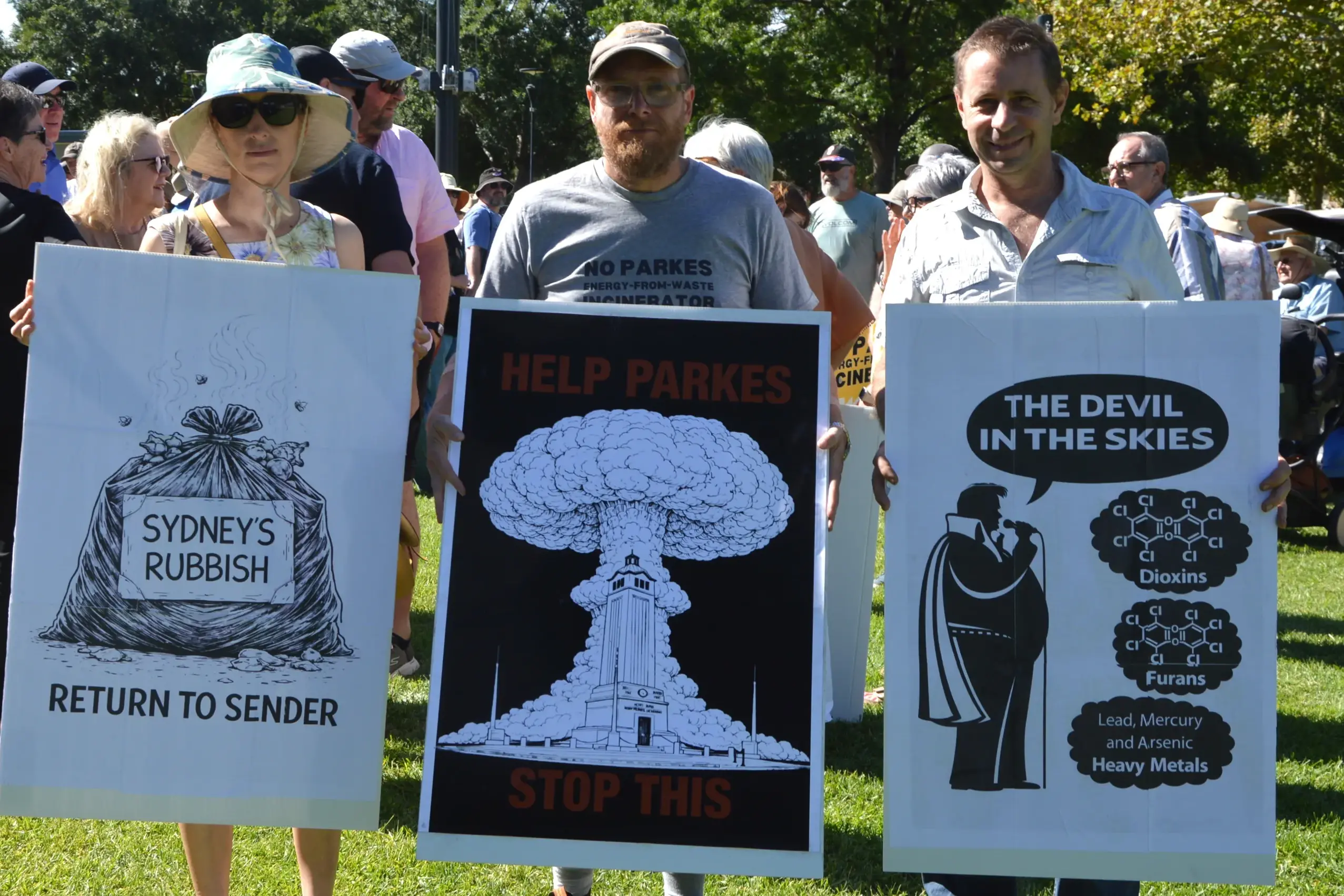
"Why not build a Paramatta incinerator or a Manly incinerator? It would save the transport costs and greenhouse gas emissions, and reduce the transmission lines," Rebecca said.
Rebecca warned of potential impacts an incinerator could have on Australian agriculture's "clean, green" reputation.
"Once contamination reaches soils, pastures and livestock, it doesn't simply disappear," she said.
"Australia's clean, green, image is one of our greatest competitive advantages in agriculture."
Parkes Councillor Joy Paddison was the final speaker and spoke both in her role as a councillor and a farmer.
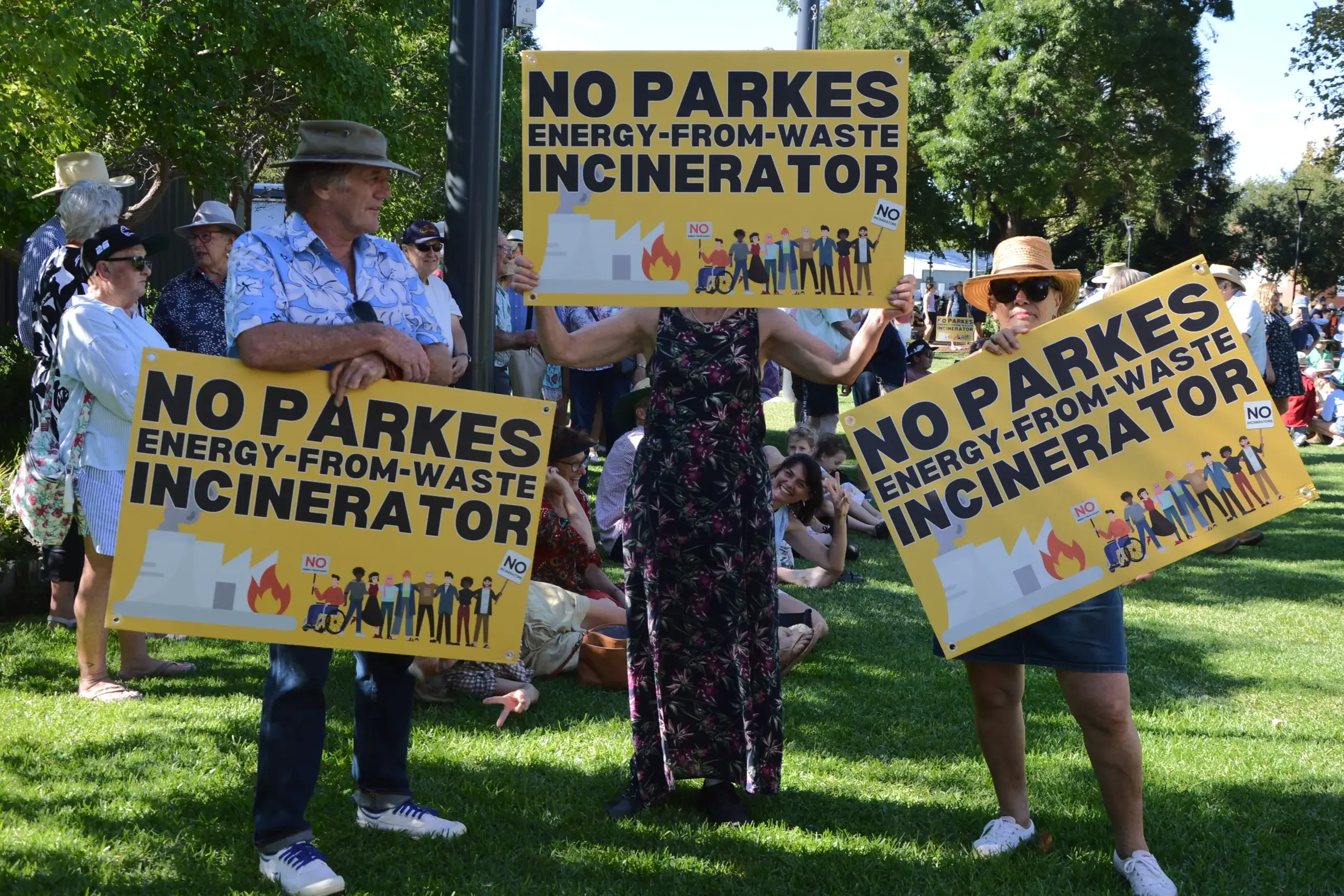
"Farmers don't normally protest. When they band together like this, it definitely means something," Cr Paddison said.
She said the issue was not about opposing progress, but about ensuring the right development occurs in the right location.
"This isn't about being anti-industry, it's about suitability. It's about protecting our farming country.
"Most of all it's about love for our community and for our children and grandchildren."