PHOTO
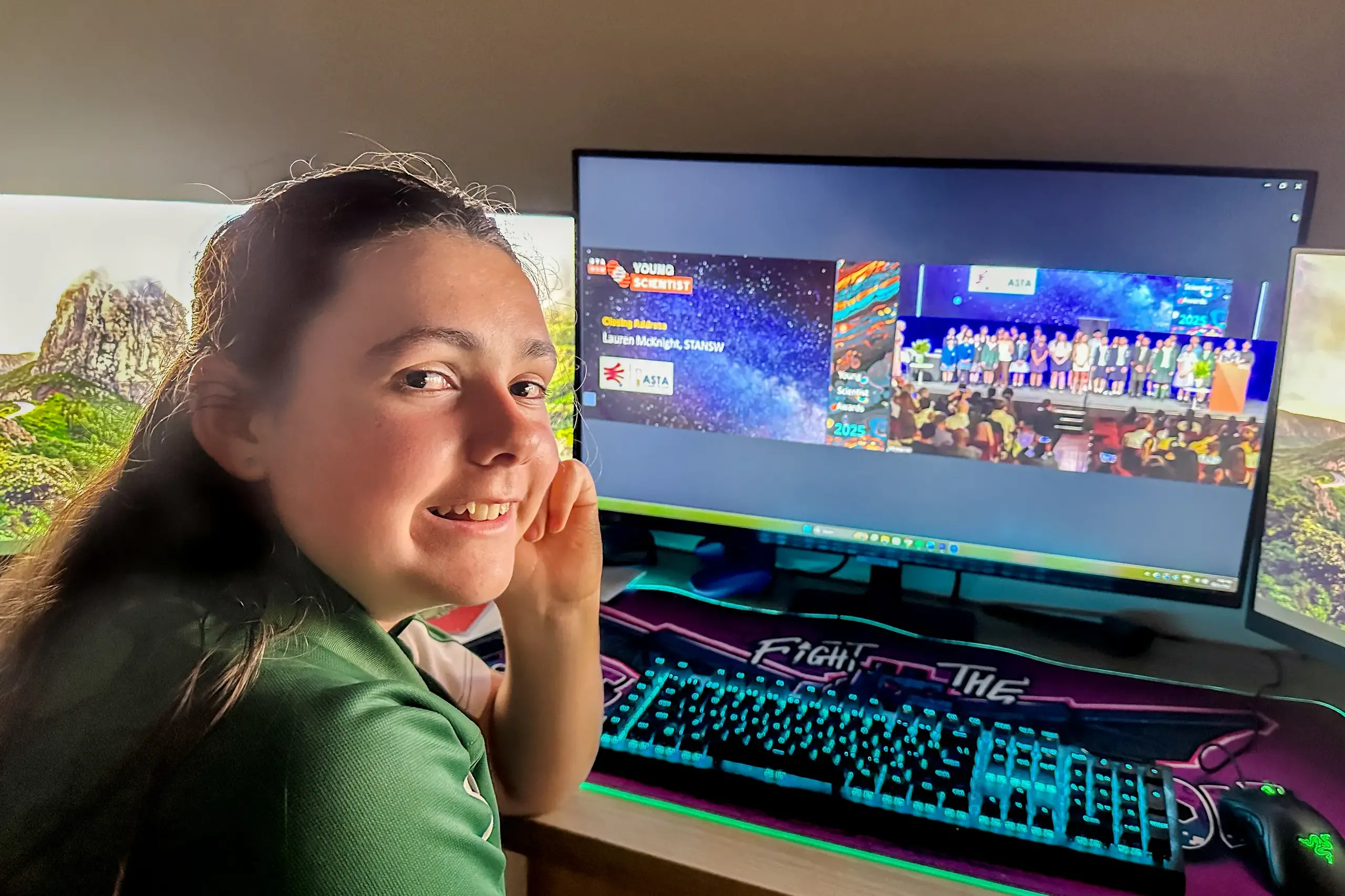
Charlotte Ballantyne has been recoginised at the 2025 Young Scientist Awards for her innovative science project and will go on to represent the Central West.
The Year 8 Parkes Christian School student's project 'How do different surfaces and environments affect fingerprint durability?', investigated how fingerprints change over time on different surfaces and under varying conditions.
Her findings revealed that prints on metal changed the least, while those on paper and those exposed to more light and warmth degraded the most.
These results support forensic practices that prioritise collecting prints from bright or porous surfaces first, while prints on metal may remain intact for much longer.
The prestigious awards ceremony held on 28 November at the University of Technology Sydney (UTS), celebrated scientific and technical innovation by K-12 students across NSW.
More than 500 projects were submitted statewide with awards recognising students' creativity, curiosity and problem-solving skills.
Although Charlotte was unable to attend in person, she live-streamed the event from home and was thrilled to receive an Encouragement Award given to highly commended students who show particular promise and are encouraged to pursue further development.
Charlotte was also one of three students announced to represent the Central West at the National ASTA iCubed Awards.
Mrs Wynstra who submitted two entries to the awards for Charlotte and Chelsea Ray (year six) said it is wonderful to see Parkes Christian School students' scientific curiosity and hard work recognised at such a prestigious event.
"Both Charlotte and Chelsea have shown creativity, dedication and a passion for science that will take them far."
The Young Scientist Awards program now in its 33rd year and run by the Science Teachers' Association of NSW (STANSW) in collaboration with UTS and other sponsors, aims to engage students in authentic scientific practices, encouraging inquiry, experimentation and innovation.
Vice President of STANSW Dr Lauren McKnight said through the Young Scientist Awards, students engage with authentic practices of science.
"They ask question, test ideas and put their scientific skills into action. By celebrating their achievement, we're recognising the creativity, persistence and critical thinking that fuel Australia's future innovation."
Parkes Christian School congratulates Charlotte on her outstanding achievement and looks forward to following her journey in 2026 at the National ASTA iCubed Awards.