
PHOTO
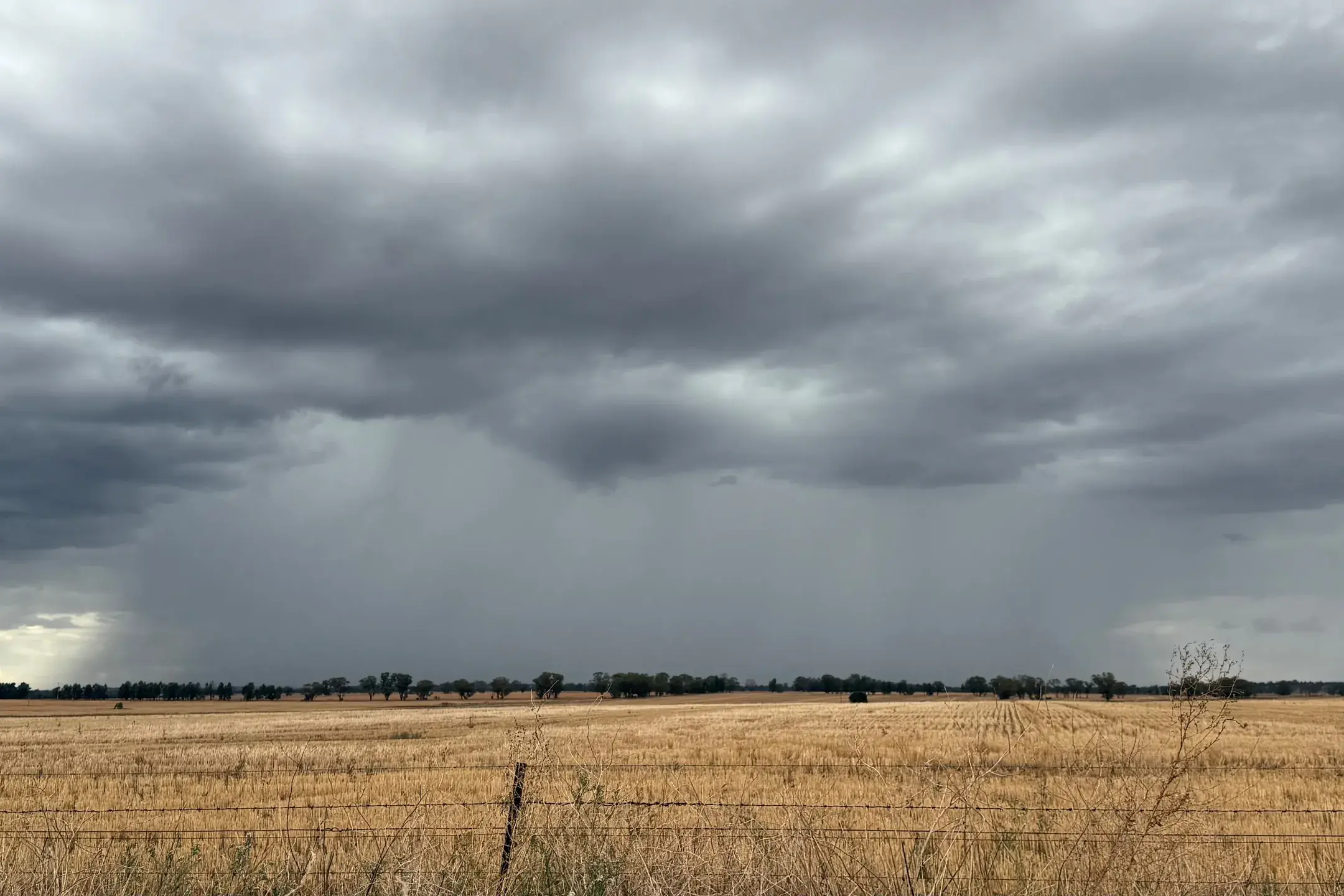
Rainfall across the region may have well fallen short of long-term averages in 2025, but it came at the right time for some farmers according to one district agronomist.
"From a grain-growing point, yes," said Parkes-based Central West agronomist Peter Yelland.
Bureau of Meteorology data - that dates back for some 120-150 years, others 30-50 years - shows that the 2025 totals for Forbes, Parkes, Cowra, Grenfell and Young were between 109mm to 180mm below their long-term yearly averages, Forbes with the lowest total at 342.8mm.
Parkes was next at 450mm but had the biggest drop from its average of 630.6mm, Cowra was 468.6mm, Grenfell 512.1 and Young 517.8.
The totals are still double or close to than their driest years on record, being 158.8mm in 2006 in Forbes, 215.5mm in 1944 in Cowra, 229.8mm in 2019 in Parkes, 233.3mm in 1982 in Grenfell and 262.4mm in 2006 in Young.
And compared to the last drought, at its peak, the 2025 totals are higher: in 2019 overall Parkes had 229.8mm, Forbes recorded 236mm, Grenfell 285.2, Cowra 302.7, and Young was 438.4mm but had 370.6mm in 2018.
Parkes had a steady, and the wettest, first six months in 2025 than its neighbours but finished off the driest come December. And it was the only area to record much more than 10mm in April (48.2mm).
March and particularly April were very dry for the other towns, Young only collecting 8.4mm in March and just 1.4mm in April.
Grenfell received 15.4mm and 7mm respectively and Cowra 10.7 and 8.8.
Forbes had mixed readings throughout the year but nothing over 43.2mm which actually came in January and it had a drier February (12mm) than March (30.8), and April recorded 10mm.
All four had a wetter end in the last three months of 2025 than they did at the start.
"On a general rule, grain production last year was higher than expected," Mr Yelland said.
"That's mainly because farmers weren't expecting that much, given how hard the spring was particularly.
"We did have a mild September."
But Mr Yelland said it was the rainfall the year prior that made the difference for the region in 2025, resulting in good subsoil moisture.
All five areas were on par or above their long-term rainfall averages in 2024, recording between 668-765mm.
"That's really what got us home this year," Mr Yelland said.
"But we're now going into 2026 with basically zero moisture.
"Young and Cowra had a late start to the season last year, they seemed to get it all at the backend.
"The drought has been very southern for about two years now and it's starting to creep north."
Nationally, rainfall was very varied, the Bureau of Meteorology’s preliminary summary of 2025 weather shows.
Climatology Specialist Nadine D’Argent said rainfall was 7.8 per cent above the 1961-1990 average at 502.2mm.
“Rainfall was below average for most of Tasmania, Victoria and South Australia, southern and inland areas of NSW and large parts of Western Australia.
“Rainfall was above average for much of Queensland, northern and eastern parts of the Northern Territory, coastal areas of NSW and northern and some southern areas of Western Australia."
Looking at temperatures, Forbes takes the hottest day of the year in 2025 out of the five towns at 41.5 degrees on 18 December, closely followed by Parkes at 41.4 degrees 11 months earlier on 28 January.
And Forbes also claims the coldest morning of 2025 at -5.5 on 21 June, ahead of Young even which dipped to -4.3 on 22 June.
"We did get a lot of wind in October which really dried things out," Mr Yelland added.
"We had late frosts but we didn't get the damage we might have expected."
Heading into the new year, Wyangala Dam was at 77 per cent of capacity on Monday, 19 January, Carcoar Dam was at 95 per cent and Burrendong Dam at 41 per cent.