As the Parkes Shire sweltered through the last seven days of January in 41-plus degree heat, Peak Hill endured its hottest January day in 60 years.

The mercury in Peak Hill peaked at 45.8 degrees on Australia Day and again at 45.3 on Saturday, 31 January, surpassing the town's previous January record of 45 degrees in 2020, measured at the Peak Hill Post Office where records began in 1966.

It was a fraction cooler at the Parkes Airport at 44.3 degrees on the last day of the month, the hottest for January this year and only 0.5 of a degree away from the January record for Parkes of 44.8 degrees, also set in 2020.

It does however claim the third hottest January day on Parkes' 28-year record.

Australia Day in Parkes reached 44.1 degrees.

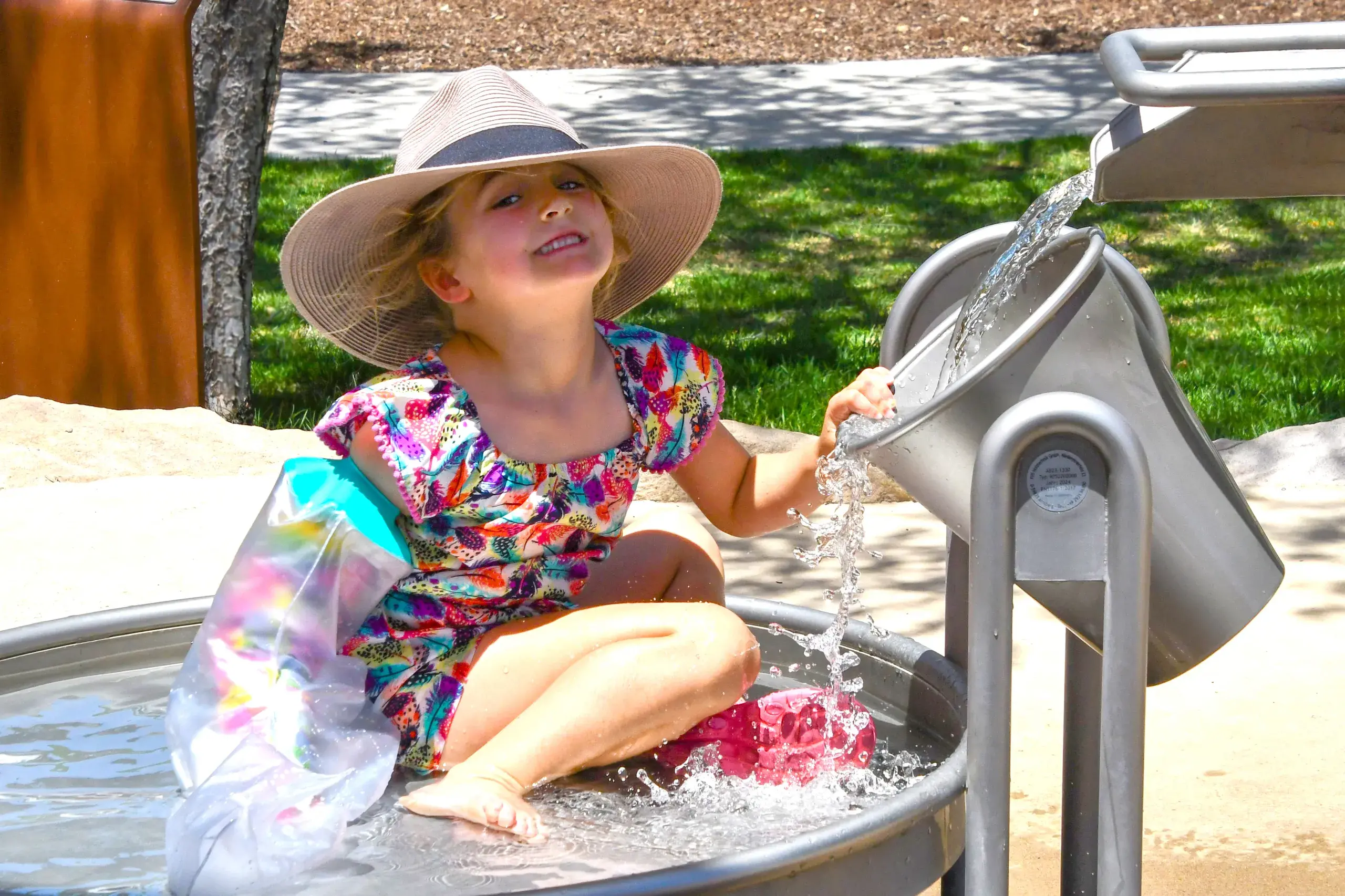
Never too big to play at the splash park, Krista Smith and Sam Ervin found a fun way to cool down on Saturday.

25 January was the first of seven-straight days of temps into the 40s recorded at Parkes: 42.9 degrees, 44.1, 41.3, 43.6, 41.8, 41.3 and 44.3.

As respite Parkes Shire Council provided free entry into Parkes Pool for the week to help people escape the heat, while others enjoyed splashing around at the Kelly Reserve splash park.

But many remained indoors, curtains drawn and air conditioners and fans cranked.

The hottest day on record overall for both towns is 11 February, 2017 at 46 degrees in Peak Hill and 45.9 degrees in Parkes.

With a rather warm January in general this year - averaging at 37 degrees for Parkes and 38.3 degrees in Peak Hill - it's brought very little rain.

Parkes only had four days of rain in January, amounting to 11.8mm, making it the driest January we've had in 28 years.

Even during the last drought in 2018 and 2019 the January rainfalls were 35mm and 41mm respectively.

Though overall there has been drier months in the last two to four years.

Krista Smith and Hazel Ervin cooled off at the splash park in Parkes on Saturday when it peaked at 44.3 degrees, becoming the third hottest January day on record.

Peak Hill saw only half the amount Parkes did with just three days of rain in January totalling 5.8mm.

It hasn't been that dry in January in Peak Hill since 1985, according to its Bureau of Meteorology rainfall records which date as far back as 1891.

All this has come off the back of a drier than average year in 2025 with Parkes' annual rainfall total at 450mm, 180mm below its long-term yearly average, and Peak Hill at 425.6mm, 141mm below its yearly average.

These totals though are still almost double their driest years on record, being 229.8mm in 2019 in Parkes and 232.6 in 1944 in Peak Hill.

2018 has so far been the driest year in the last 19 years for Peak Hill, at 279.8mm.

Rain came at the right time for some farmers last year and set the region up the year before that, but now Parkes district agronomist Peter Yelland said we're heading into 2026 with "basically zero moisture".

"The drought has been very southern for about two years now and it's starting to creep north," he said.