PHOTO
I briefly explained, in an article earlier this month, what causes lunar eclipses such as the one that occurred back on 3 March earlier this year.
Today I will give a basic explanation of what causes the other type of eclipse, a solar eclipse.
Solar eclipses are the dangerous ones that you should not look at, as this will cause serious, permanent damage to your eyes.
You may have noticed that every now and then you can’t see the moon in the evening sky for a few nights.
The moon is still there but, because of the timing of its orbit around the earth, the moon instead crosses the sky during daylight hours on these days.
However, because of the glare of the sun, and because the sun is only lighting up the far side of the moon that we can never see, the moon appears to have temporarily disappeared.
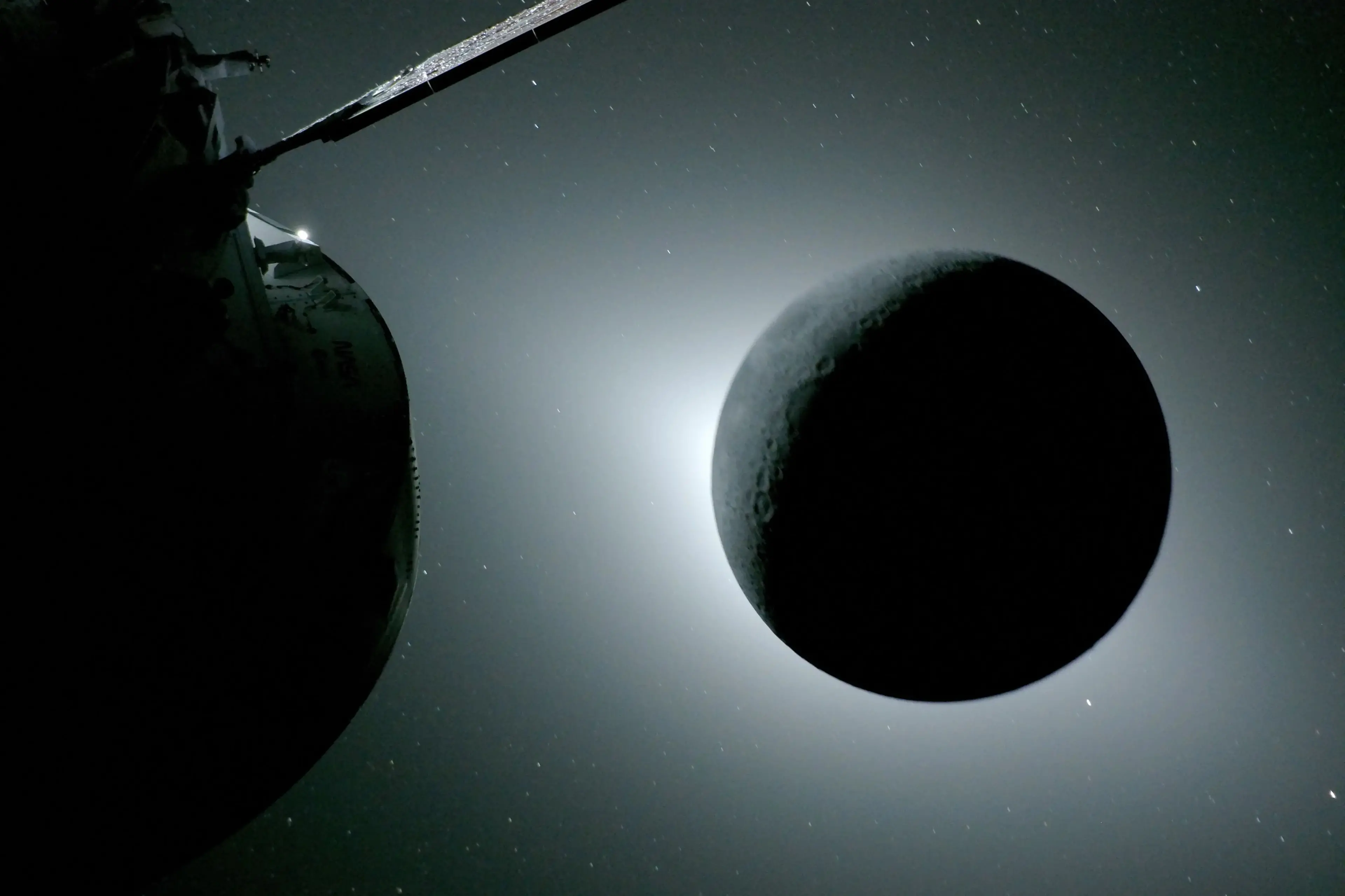
However, once a year or so, if you happen to be standing at a particular location on earth, you will see the moon move directly in front of the sun for a few minutes, temporarily blocking the sun’s light and causing a brief “nighttime” in the middle of the day.
Solar eclipses are relatively common and occur somewhere on earth at least once a year or so.
You can imagine how our ancestors centuries ago, not understanding what a solar eclipse was, were filled with fear when the sky suddenly became dark in the middle of the day.
Solar eclipses also cause confusion for wildlife, especially birds, as they suddenly start to roost in trees, only to be “woken up” a few minutes later.
However, solar eclipses are not always visible from the same place on earth.
Often, dedicated “eclipse chasers” travel to some quite remote locations to observe solar eclipses.
However, as it happens, we in our part of the Central West are in for a treat.
On 22 July, 2028 a solar eclipse will be visible along a line that extends right across Australia, starting in the Kimberley region of Western Australia, then moving on across the Northern Territory, western Queensland and western NSW, to just north of Parkes (near Dubbo and Wellington) before passing directly over Sydney and continuing over the Tasman Sea to southern New Zealand.
You heard it here first.
This eclipse will cause around three minutes of darkness in the middle of the day at each location along the so-called path of totality.
As mentioned before, solar eclipses are dangerous to your eyes and you should never look at the sun during an eclipse unless you are wearing special eclipse glasses, and preferably under the supervision of an experienced astronomer.
Members of the Central West Astronomical Society will be present at key locations to observe the 2028 eclipse and assist members of the public hoping to safely observe this spectacular natural event.
More details will be made available well before 22 July, 2028.
In the meantime, if you would like to learn more about solar eclipses or anything else about the wonders of the night sky, you are most welcome to come along to the next meeting of the Central West Astronomical Society tomorrow, Friday, 1 May at 7.30pm at the Parkes Services Club in Short Street (upstairs in the Sunset Room).
Members of the public are welcome to attend this meeting free of charge.