PHOTO
You may not have thought of why Easter occurs at this time of year.
However, you may be interested to know that Easter Sunday is calculated to be the first Sunday after the first full Moon after the Northern Hemisphere Spring Equinox.
The Northern Hemisphere Spring (or Vernal) Equinox is one of two days of the year when everywhere on Earth gets exactly 12 hours of daylight and 12 hours of night.
This occurs on 21 or 22 March each year.
(The actual date varies between these two days from year to year.)
On this day, we in the Southern Hemisphere experience our Autumn (or Autumnal) Equinox.
The other Equinox each year occurs six months later, on 21 or 22 September when the Northern Hemisphere has its Autumn Equinox and we in the Southern Hemisphere experience our Spring Equinox.
So another way of knowing when Easter will occur each year is to by determining the first Sunday after the first full Moon after 21 or 22 March.
(The first full Moon after 21 March this year happens to be Thursday 2 April, and the first Sunday after 2 April this year is 5 April, which is Easter Sunday this year.)
You may be wondering why the Christian Churches use this formula to determine Easter Sunday.
There are many reasons, steeped in symbolism and tradition, but an explanation of all that will have to wait for another time and place.
However, two other interesting phenomena involving the Moon are lunar eclipses and solar eclipses.
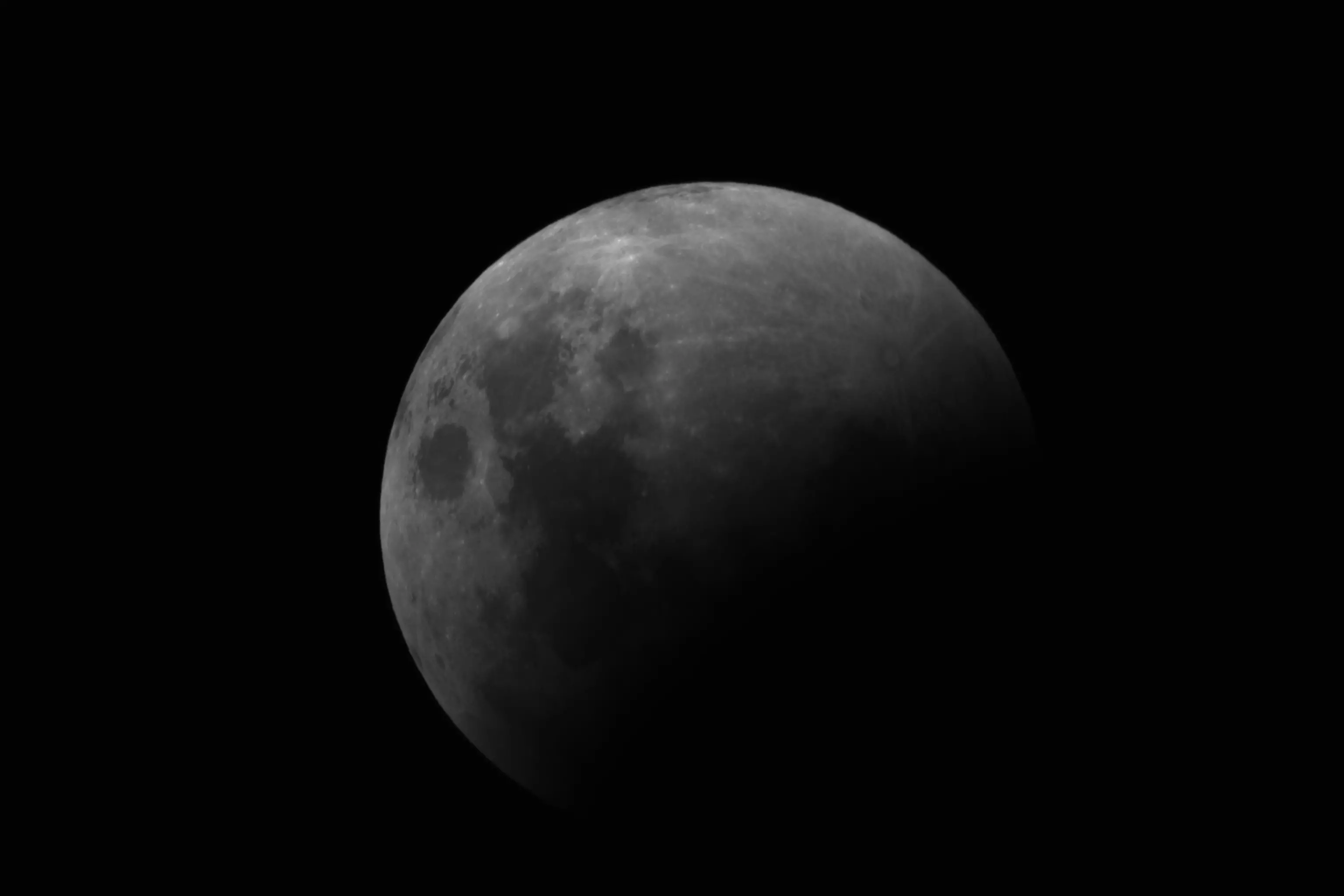
You may recall that a few weeks ago, on 3 March 2026 many locations across the Central West saw a lunar eclipse (depending on local clouds).
Lunar eclipses are the safe eclipses to look at.
They occur at nighttime when a full Moon is visible.


Every so often, the Sun, Earth and Moon line up perfectly.
When they do, the Moon passes through the Earth’s shadow for a few hours.
(Yes, the Earth and every other body in our Solar System casts a shadow because of the Sun shining on it.)
Over the course of an hour or so, you can see the Earth’s shadow slowly darkening the Moon.
However, not too long before the Moon is totally darkened, something strange starts to happen.
The Moon starts to glow with a dark red colour.
This happens because the Earth’s atmosphere acts like a giant prism and splits the sunlight travelling through it into the colours of the rainbow.
Most of the coloured light continues on into space and we can’t see it in the night sky.
However, because of the laws of physics, the red light is refracted, bent inwards, and reflects off the Moon’s surface, temporarily giving it a blood-red colour.
Gradually, the Moon starts to lighten again as it moves out of the Earth’s shadow, and it eventually goes back to being a brilliant full Moon.
Back in past, more superstitious times, this reddening appearance of the Moon was sometimes known as the Moon “turning to blood” and was often thought to be an omen of some disaster.
These days we know that a lunar eclipse is simply part of the amazing cosmic dance of the Universe.
The other type of eclipse is a solar eclipse.
These are quite different to lunar eclipses in their cause and appearance, and they will be the topic of a future edition.
If you would like to learn more about the Moon, its eclipses, and anything else about the wonders of the night sky, you are most welcome to come along to the next meeting of the Central West Astronomical Society.
Normally the CWAS meets on the first Friday evening of the month but because this clashes with Good Friday in April, the CWAS will instead be meeting at 7.30pm on Monday 13 April 2026 at the Parkes Radio Telescope Visitor Centre (turn off onto Telescope Road from the Newell Highway approximately 20km north of Parkes).
The guest speaker will be world-renowned Australian astrophotographer Anthony Wesley.
Members of the public are welcome to attend this meeting free of charge.