
PHOTO
67389.0
Volunteers from across New South Wales have put their emergency response skills through their paces in a high-pressure rescue challenge designed to prepare them for the moments that matter most - when lives are on the line.
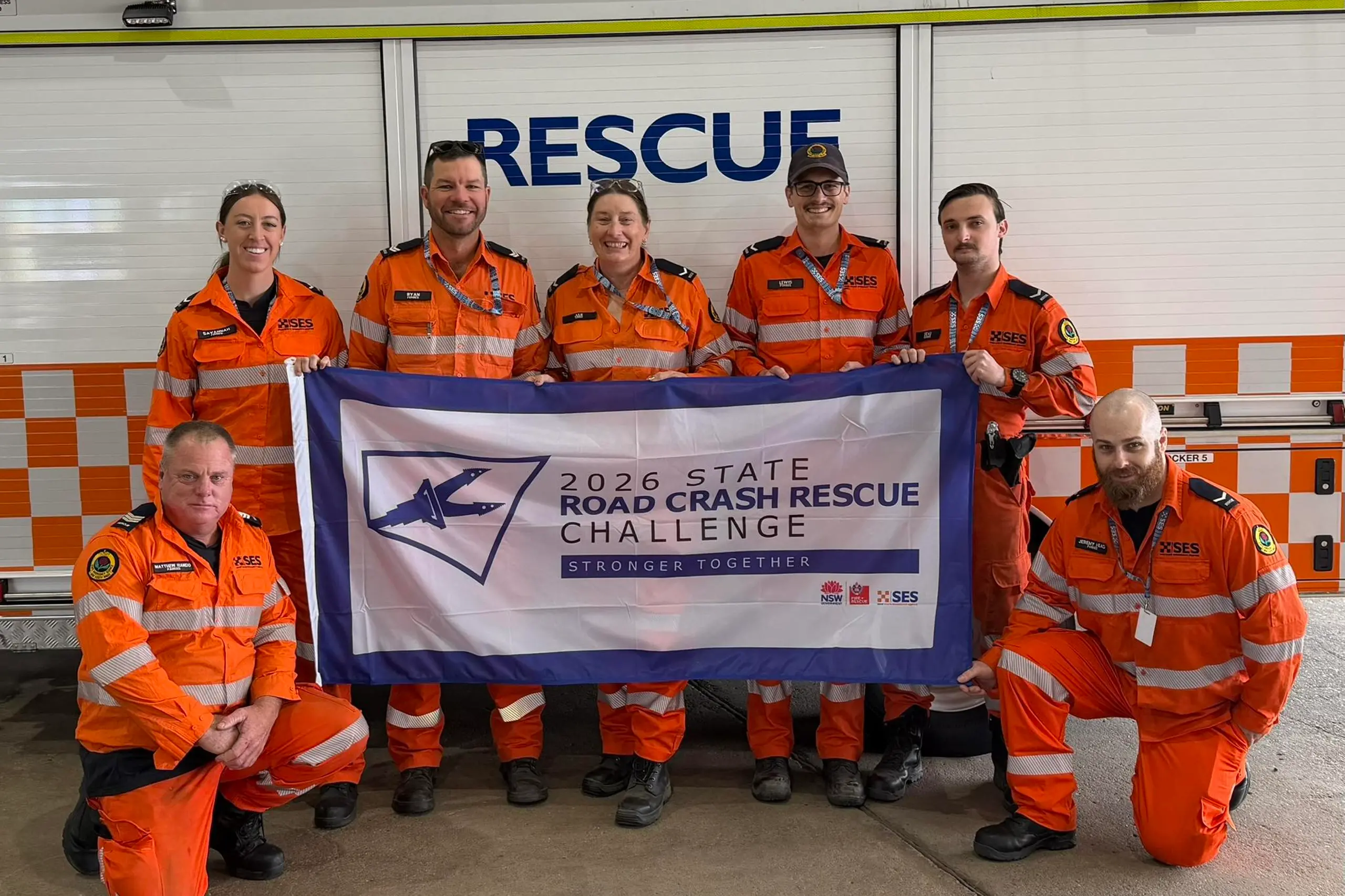
The Forbes State Emergency Service (SES) team of SES members from Forbes, Parkes and Peak Hill joined emergency service crews for a multi-day event focused on road crash rescue and trauma response.
The event began with a symposium exploring road safety research, response strategies, and the critical importance of collaboration between agencies.
From there, they shifted to realistic, high-intensity simulations - including a staged four-car crash that required teams to respond as they would in real life, with crews arriving in stages and escalating the response as more resources became available.
“We had to scale up management of the incident and task those teams – that was a really worthwhile exercise, that’s exactly how it happens,” Ryan said.
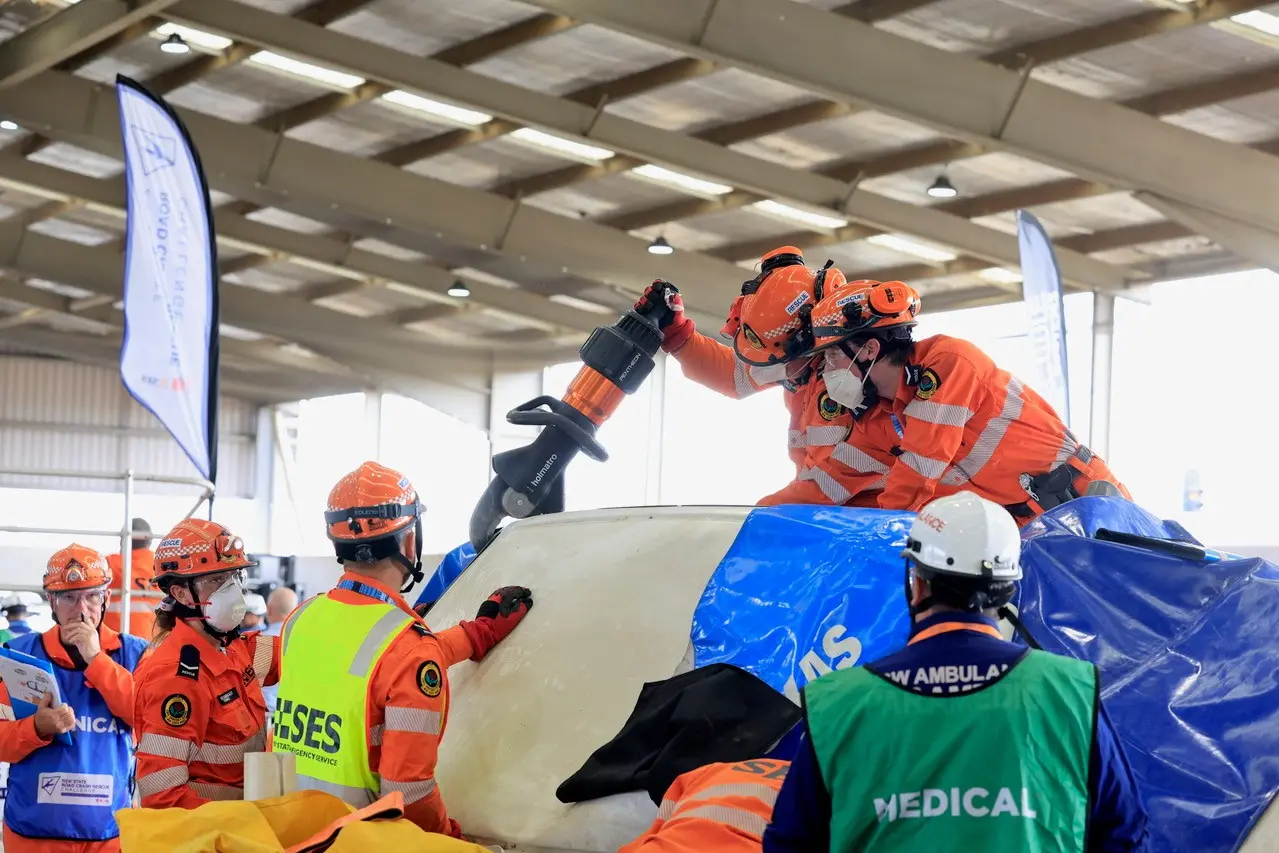
Over the next two days, teams tested both rescue and medical capabilities under strict time limits, with two road crash scenarios giving crews just 30 minutes to treat and extricate patients.
The challenges were deliberately complex and responders faced situations including overturned vehicles, obstructed access points and hazards such as simulated powerlines and smoke. Actors with realistic injuries added to the pressure.
“It was really well done,” Ryan said.
“The whole idea of this competition is to really ramp up the time pressure - you’ve got the scrutiny of assessors watching you, an audience watching you, and you’ve got the deliberate complexities of the scenarios which compound to pressure test everything you can do.”
A major focus this year was the growing presence of electric vehicles and hybrid cars on Australian roads, including the risks associated with lithium batteries.
“There’s a whole procedure around isolating these vehicles when you first get to the scene and not working in the zones that the car could move before all that’s done,” Ryan said.
“Each scenario had an electric vehicle in it and part of our job was to identify that it was an EV, find the specific information on the car (app) and then shutting down and isolating that vehicle before we could work on it.
“So that was a first this year.”
In addition to road crash rescues, teams were tasked to an industrial / domestic rescue where a patient’s hand was trapped in a garden mulcher, and a trauma challenge involving a serious neck injury caused by an angle grinder.
They also completed a CPR challenge, performing resuscitation on a specialised training mannequin capable of measuring the accuracy and effectiveness of their efforts.
Team Forbes placed ninth overall out of 17 teams, with strong results including fifth place in both the trauma and CPR challenges, and sixth in the domestic/industrial rescue.
More importantly, participants returned home with new skills, insights and confidence, that could make all the difference on the road in future.
“It’s about extending ourselves so you’re ready for what they call “low frequency, high consequence” jobs,” Ryan said.
“The jobs you are unlikely to see but if you do see them, you need a skillset and competence that’s above a basic level.”
Being equipped for those situations also helps them be efficient and effective in the situations they're more likely to get called to.
The challenge hosts team members with anything from 18 months to more than 20 years of experience in emergency services.
“And even the people who have been doing it for 20-plus years these scenarios are enough to put us under pressure and find things that an assessor can suggest improvements on and that’s really what it’s all about,” Ryan said.
Organised jointly by NSW SES, Fire and Rescue NSW, and The Firefighter Championship Association, the challenge included teams from NSW Police, NSW Ambulance, Rural Fire Service, Volunteer Rescue Association and VRA Rescue NSW.