
PHOTO
Two engineering consortia have been shortlisted in the search for a solution to safely reopen the Great Western Highway, the NSW Government has announced.
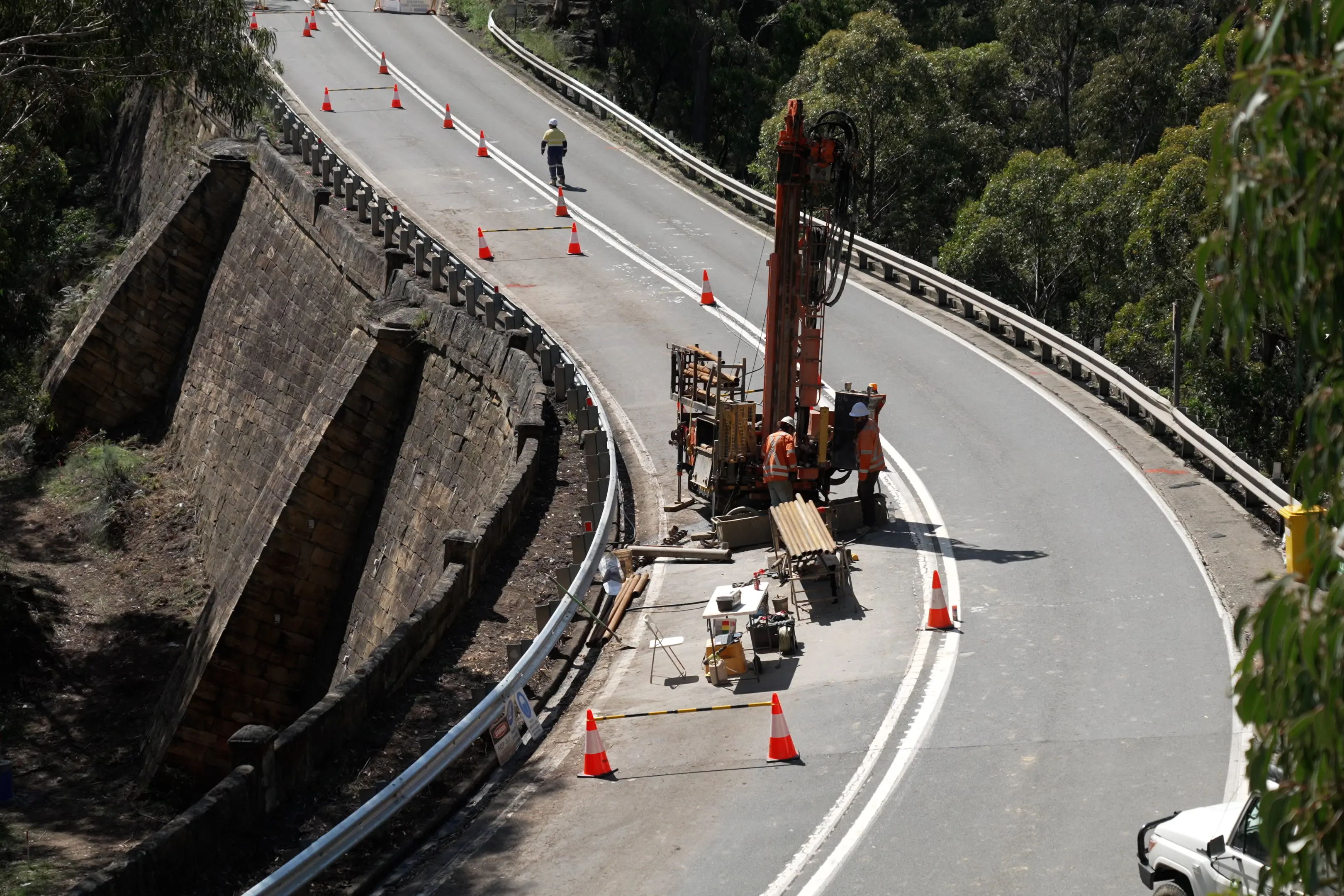
Following an industry briefing and site inspection with 20 Australian and international companies, experts in geotechnical and complex road construction submitted proposals to fix Mitchells Causeway which has been closed since substantial cracking and movement was detected in March.
Transport for NSW has now shortlisted two consortia led by experienced construction firms Seymour Whyte and Gamuda.
It says both proposals are being assessed and developed side-by-side over the next four weeks to determine the safest and fastest solution to reopen the road.
Transport for NSW Secretary, Josh Murray, said there had been a strong response from industry, and two partners had been selected to develop solutions in parallel.
A final option and delivery partner will be selected to undertake the restoration work.
“Our focus is on delivering a solution that is fast, safe, durable and resilient for the long term," Mr Murray said.
“At the same time, we’re getting on with critical early work on-site and continuing to improve detour routes to keep people moving as safely as possible.
“We understand the community wants certainty and we’re working as quickly as possible to confirm a final solution and get construction underway.”
Examining both options in parallel will allow the Government to move faster towards selecting a consortium and starting major construction.
Early preparation works are already underway on site to enable construction to begin as soon as the engineering solution is confirmed.
The closure of the Great Western Highway at Victoria Pass will extend beyond June and the Government will provide an updated timeframe once a consortium is appointed.
Transport for NSW is also examining the potential for staged approaches that could allow limited access on the Great Western Highway through Victoria Pass while the road is being repaired.
These options will be worked through by Transport for NSW with the two consortia, and any interim access arrangement would need to be safe and not delay the full reinstatement of the Causeway.
Minister for Roads, Jenny Aitchison, said the government was throwing "everything at this".
“We don’t underestimate the impact this closure is having on people’s daily lives," she said.
“But we will not gamble with safety and reopen Mitchells Causeway before we can guarantee it is safe. Safety must come first, and that will always guide our decisions.
“This is a unique process that is moving at a pace and scale unlike anything Transport has undertaken before.
“Rather than working through one option at a time, shortlisted solutions are being developed in parallel so we can determine which approach can deliver the best outcome for the community, sooner.
“As we have always said, once we have appointed a contractor we will be in a position to update the community with a new timeline to reopen the road.”
The Government acknowledges the closure has been challenging for communities across the Blue Mountains and Central West who have been most affected by the closure and ongoing detours.
However, expert advice remains clear that the cracking and structural movement at Mitchells Causeway is serious and ongoing.
The road is currently not safe for traffic and will not reopen until engineers are confident the public is not at risk.
The NSW Government has committed $50 million towards improving the safety and resilience of key detour routes through the Blue Mountains and Central West. More than $15 million worth of work has already been completed.
Public transport uplifts introduced earlier this year will continue for the duration of the closure, with NSW TrainLink’s free turn-up-and-go coach services remaining in place during the closure. These services are being well used by more than 300 passengers each week.
The Great Western Highway Community Coordination Taskforce has been meeting weekly with local councils, industry, businesses and community stakeholders and the Small Business Commission has been engaging directly with individual businesses. The government is also continuing to explore additional support for impacted businesses.
The NSW Government has also provided $15,000 in funding to Blue Mountains City Council, Lithgow City Council and Bathurst City Council to support tourism to the region while the closure remains in place.