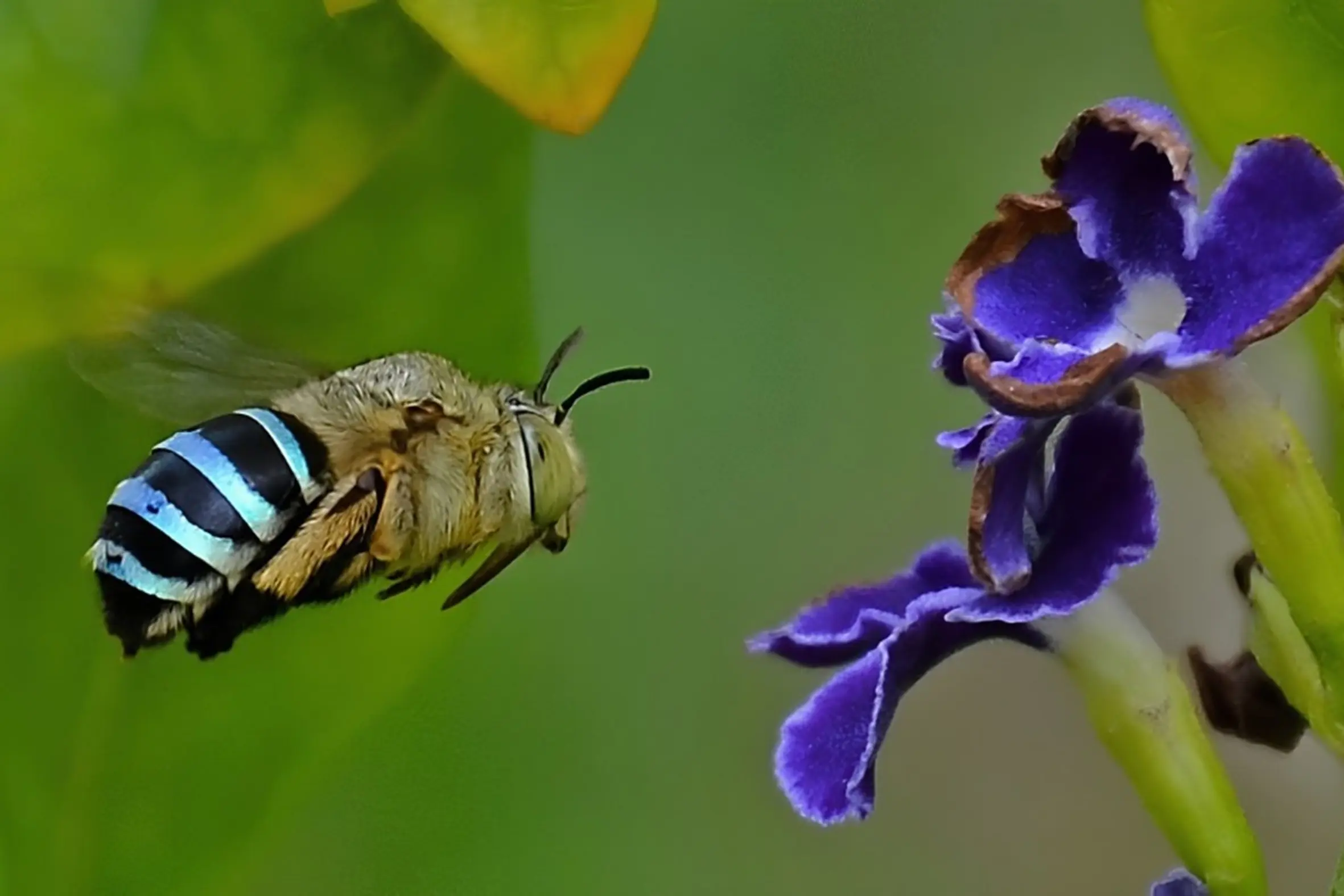
Spring is well and truly here, and you don't have to look far to see colourful gardens and paddocks greening up. While the warmer weather gets most of the attention, there's a lot of activity happening among the flowers as well. Right now, thousands of tiny workers are busy helping plants reproduce, often without us even noticing. When people think of pollinators, honeybees often come to mind first. But European honeybees are not native to Australia, and feral colonies can create problems for local wildlife by occupying tree hollows and displacing native birds and mammals that rely on hollows for shelter and breeding. They've been known to sting baby birds and mammals to death to get adults to abandon their hollows. Luckily, Australia is home to more than 1700 species of native bees, many of which can be found in our backyards. Unlike honeybees, most native bees don't live in large hives. Many are solitary and make their homes in small holes in timber, hollow stems, or even tunnels in the ground. Our native bees are incredibly important as they help native plants (and crops) reproduce and contribute to the health of our gardens and farms. Bees aren’t our only native pollinators. Butterflies, moths, beetles, flies, wasps, and even some birds and bats all play an important role in moving pollen between flowers. Over the weekend I noticed large numbers of a placid yet flighty wasp all over my bottlebrush trees, and a quick internet search told me it was the Orchid Dupe Wasp - a native, parasitic wasp that lays its eggs in ground-dwelling caterpillars. Another important pollinator currently making its way through our region is the Bogong moth. Many locals have noticed large numbers of moths in recent weeks as they continue their migration to the Snowy Mountains. As evening arrives, Bogong moths visit all kinds of flowers to feed on nectar. They've been spotted pollinating all sorts of plants, including citrus trees, as they move from blossom to blossom at dusk. Just as our native insects finish for the day, our native moths and other nocturnal insects take over the night shift. Many fruit, vegetable, and seed crops rely on insects to move pollen between flowers. Native shrubs, wildflowers, and trees also depend on pollinators to set seed and produce the next generation of plants. In turn, those plants provide food and habitat for birds, reptiles, and other wildlife. It's a great example of how everything in nature is connected. The good news is that helping pollinators doesn't require a lot of effort. Planting a mix of flowering species, especially local native plants, provides food throughout the year. Leaving a few areas of the garden a little less tidy can also help by providing shelter and nesting opportunities. Reducing unnecessary pesticide use gives pollinators a better chance to thrive. For families looking for a fun weekend activity, building a native bee hotel is a great option. These simple structures can be made from untreated timber, bamboo, or bundles of hollow stems, and provide nesting sites for some native bee species. They're easy to make and a great way to get kids interested in the natural world. A simple internet search for ‘DIY native bee hotel’ will get you started.