
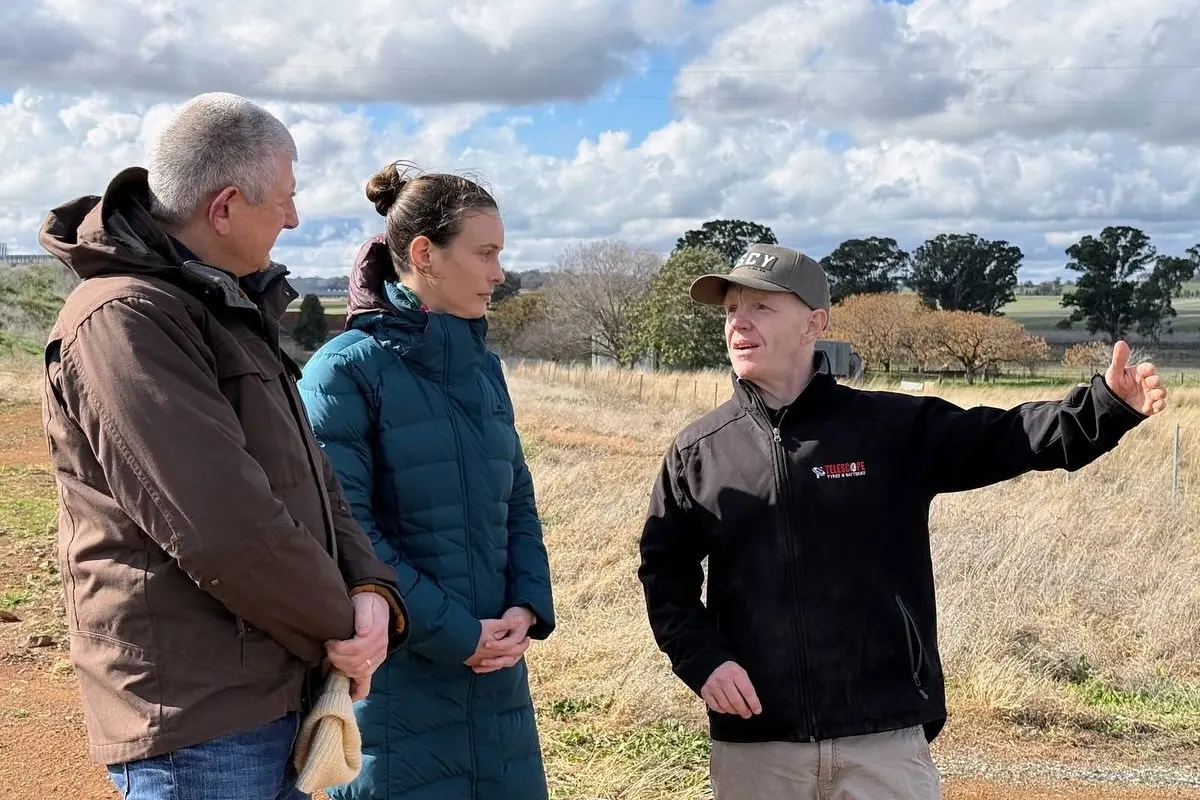
PHOTO
There will be a parliamentary inquiry into waste to energy incinerators, not just on those proposed for Parkes and Tarago, but on such facilities statewide.
That's the outcome from a debate in the Upper House on Wednesday after NSW Nationals MP Scott Barrett moved the motion for an inquiry and fellow Nationals MP Nichole Overall was appointed Chair of the NSW Legislative Council Select Committee.
The National Party initially proposed to look into two large energy recovery facilities earmarked for Parkes and Tarago near Goulburn, but it's now been expanded to cover other potential areas in NSW.
Greens spokesperson for Health and Waste Dr Amanda Cohn MLC was confirmed as the deputy chair of the Select Committee and successfully pushed for an amendment to broaden the terms of reference of the inquiry to include all of NSW.
It will look at matters including the risk of potentially toxic emissions, the health implications of the projects and the impact they will have on agriculture.
The inquiry will also examine alternatives to reduce or manage residual waste produced by Greater Sydney, where the rubbish to be incinerated is expected to come from, more than 600,000 tonnes of it.
Along with Parkes and Tarago, the state government’s Energy from Waste framework permits facilities in Lithgow and Tomago in the Hunter region after similar projects were binned following community backlash in Sydney.
Dr Cohn has built on the Greens’ long-standing opposition to waste to energy incinerators since being elected in 2023, and was in Parkes on 26 July to speak at the information night hosted by Parkes Clean Future Alliance which brought-out nearly 600 people.
Mrs Overall appreciated the support across the chamber.
“This provides the chance for community members to raise the many questions they have around potentially millions of tonnes of waste being dumped in their backyards,” she said in a Nationals statement issued to media.
“The objective is to fully explore the issues and look at options and alternatives to the ever-growing Sydney waste problem that doesn’t leave some areas worse off than others.
“People have genuine concerns around the plan and they are coming from a place of wanting answers and information that they feel they just haven’t received.”
Mr Barrett is encouraging people to come forward and have their say.
“Initially this was a tough issue for me, I want to see our communities thrive and grow, but we don’t want the projects that will put them at risk,” he said.
“The proposed Parkes incinerator would divert 600,000 tonnes of waste from Sydney, so it’s common sense for that community to have their voices heard, which is something that was sorely missing from the consultation phase of this project.
“I recently took part in [the] information night and it was clear the community feels there are too many unanswered questions here," Mr Barrett said.
“I look forward to working with the Member for Goulburn Wendy Tuckerman and Dr Cohn on this matter, and the community members in Parkes who initially reached out to me,” Mrs Overall added.
Dr Cohn said waste management is a statewide issue and that the inquiry must have a statewide focus.
“It’s clear that communities such as Parkes have not been properly consulted or even informed about the impacts of waste to energy incinerators," she said, also in a statement to media.
“It is good to see the Nationals willing to have hard questions asked about a policy they supported when they were in government.
“For incinerator proposals to be taken off the table, the committee and the government must examine alternative solutions to reduce or manage waste.”
Parkes Shire Mayor Neil Westcott welcomed the inquiry, turning to social media to share a comment not long after it passed.
"It is encouraging to see that the EfW Parliamentary inquiry received bipartisan support," he said.
"This united approach gives confidence the questions rightly being asked by the community can be thoroughly examined with the scientific rigour required.
"I thank Scott Barrett MLC, and the other members of the House, including Penny Sharpe MLC and Dr Amanda Cohn MLC for supporting this Inquiry."
Cr Joy Paddison was also pleased to hear about the success of the inquiry motion.
A farmer too herself, Cr Paddison has openly voiced her opposition to the Energy from Waste facility proposed for Parkes, sharing the same concerns as many others in the shire community that the project could have long-term impacts on our land, health and future.
"This (inquiry) is a crucial step in ensuring greater scrutiny, transparency and accountability around these projects," she said on social media on Thursday morning.
"Our community has raised serious concerns and it’s encouraging to see those concerns being taken seriously at the highest level.
"A special thank you to Parkes Clean Future Alliance for setting the ball in motion and continuing to push for open, informed community discussion."
The amended terms of reference for the parliamentary inquiry include:
(a) The performance of the technologies proposed for the Tarago and Parkes energy recovery facilities as compared to leading thermal technologies employed in “state of the art” facilities internationally, noting such technologies as proposed are not employed anywhere else on the eastern seaboard;
(b) The spread of the emissions predicted and the quality of emissions to be generated;
(c) Health impacts from currently operating older technology waste incinerators as compared to the proposed newer technology;
(d) Impacts on human health including on regional town drinking water, rainwater harvesting and soil contamination;
(e) The impacts on agriculture locally and across the wider region;
(f) Alterations to the Parkes Special Activation Precinct specifically in relation to the proposed energy recovery facility in that region;
(g) Impacts of waste-dumping over a number of decades in the Tarago region;
(h) The methodology of emission monitoring employed by leading large scale waste to energy facilities in Australia and across the world;
(i) Alternative solutions to reduce and manage residual waste produced by Greater Sydney; and
(j) Any other related matter.