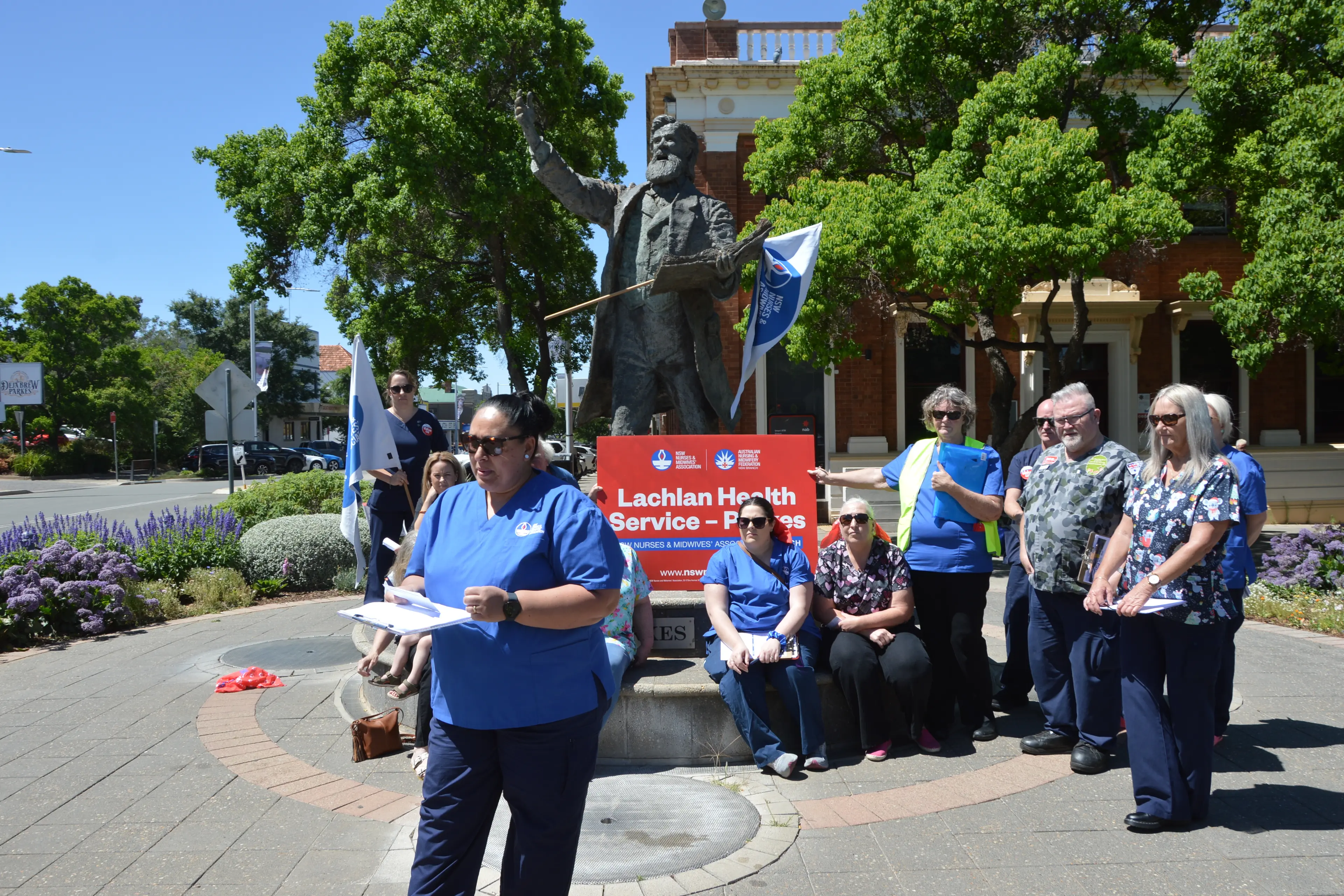
Following sustained campaigning by the NSW Nurses and Midwives’ Association (NSWNMA), nurse-to-patient ratios will finally become a reality across general medical, surgical and palliative care wards, with recruitment to commence for more than 950 nurses to be injected into the public sector workforce. The announcement by NSW Health Minister Ryan Park of an additional 950 nurses to be recruited across the state has highlighted the disparities in rural and regional healthcare, with staff at one local hospital left feeling angered by the results of the campaigning by the NSWNMA. While the long-awaited promise of nurse-to-patient ratios on wards is finally set to become a reality for some 70 hospitals across the state, with the additional nurses to be recruited to more than 360 inpatient wards including general medical and surgical units, other hospitals will miss out on the funding. Only Peer Group A, B, and C hospitals have been included in this announcement, which means at a local level Forbes Hospital will benefit from the increase in nursing numbers, while just down the highway, Parkes Hospital will unfortunately miss out after it was downgraded to a Peer Group D hospital in 2016. The creation of the Safe Staffing Levels (SSL) Taskforce to oversee the rollout of ratios, was a key election commitment by the NSW Labor government, with a promise to recruit 2480 full-time equivalent (FTE) nurses and midwives by the end of the term. The president of the NSW Nurses and Midwives Union, Parkes Hospital branch Stacey Folau said with that deadline looming in 2027, so far only emergency departments have seen an increase to staffing levels, despite the promise to include Nursing Hours Per Patient Day (NHPPD) wards, postnatal wards, ICUs and Multi-purpose Service Sites (MPSs). Since the rollout began two years ago, 81 emergency departments in NSW have begun implementing safe staff levels, with both Parkes and Forbes being granted funding for an extra six full time equivalent (FTE) staff for their EDs. "These additional positions were announced for our two local emergency departments at the end of April 2026, however, so far neither hospital has been successful in recruiting any new staff to these positions, so the safe-staffing levels are yet to be implemented in either emergency department," Ms Folau said. The disparity in the more recent announcement, where Forbes will receive an additional two FTE nurses, and Parkes is allocated none, has caused concerns for Parkes residents and nursing staff who point out that Parkes sees around 3000 more patients through their ED each year, and deal with the flow-on effect of these presentations which is increased admission numbers from these presentations. Both Parkes and Forbes hospitals are funded for 16 beds in their general inpatient units; however, Parkes often surges to 20 or more patients which helps alleviate the pressure on Orange Hospital. Ms Folau said that while both Parkes and Forbes operate Level 3 emergency departments, Parkes has been classified as a Peer Group D hospital meaning the inpatient unit runs on a different calculation for staffing than Peer Group A, B and C hospitals. Peer Group D wards do not come under the 'old' NHPPD system, and staffing for Parkes will therefore remain in line with the surrounding smaller MPS facilities, while Forbes, as a Peer Group C Hospital have been included in the announcement and are set to receive an additional two FTE equivalent staff for their inpatient unit. Ms Folau said this has caused considerable frustration for the staff at Parkes, who care for patients with the same level of acuity and care requirements as Forbes and will have to continue doing so without the nurse-to-patient ratios in place, that are designed to ensure safe staffing levels are maintained. Ms Folau said as Parkes was reclassified to a Peer Group D facility in 2016, prior to the loss of Maternity Services, and despite the branch questioning the executive of the Western NSWLHD, local member Phil Donato and Minister for Health Ryan Park, no one has been able to explain why this has occurred. Despite the challenges at the local level, NSWNMA general secretary Michael Whaites welcomed the progress of the nurse-to-patient ratios at a state level, which ensures all 15 Local Health Districts statewide will benefit. “By introducing this reform across Peer Group A, B, and C hospitals, including metropolitan, regional, and rural facilities, members and patients statewide will see the difference,” Mr Whaites said. While the recruitment for the additional six FTE nurses announced for Parkes ED continues, the staff there have had a small improvement in the roster with the Western NSW LHD agreeing to implement one of the planned new shifts in the meantime. This is the equivalent of 1.75 FTE staff and means that the emergency department is better staffed on night shifts as an interim measure until the entire six FTE roles can be filled. This follows on from pressure and rallies across the state over the last couple of years, including by Lachlan Health Service Parkes branch NSWNMA members who rallied last November demanding urgent action and promoting a community petition calling for change. Ms Folau said while their concerns for staffing remain, they are grateful for the extra interim 10 hours of funding for an ED nurse each day. "We just weren't able to deal with the workload, particularly in ED and staff look forward to this shift being filled on a more regular basis," she said. NSWNMA assistant general secretary Katrina Bough emphasised that while the milestone represented a substantial step in the right direction, the union remained focused on securing ratios across all clinical settings. “We remain fully committed to achieving our complete ratio claim and welcome continued discussions with the government to drive this forward,” Ms Bough said. “Remaining wards still need better staffing and they have not been forgotten. “We will hold the government accountable to their commitments and keep campaigning until every specialty area is included."