PHOTO
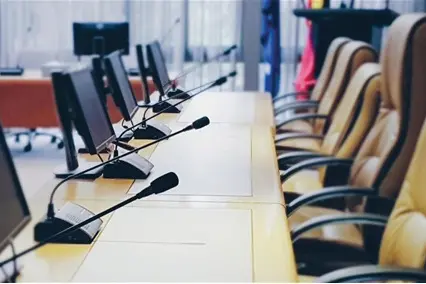
Parkes Shire Council has revised its ordinary meeting schedule that now sees councillors and senior staff meeting twice a month.
The change comes in response to the state government's newly introduced legislation that prohibits councillors, other than the mayor or chairperson, from meeting with senior staff to discuss agenda items.
To ensure compliance with the regulation and to promote more efficient processing of council business, Parkes Shire Council proposed and agreed upon an additional meeting on the first Tuesday of every month until the end of the year, at its 21 July meeting.
Council held its first fortnightly meeting on 4 August, the second meeting on the original third Tuesday of the month remains.
Except for 1 September when a meeting will not take place because of the Parkes Show public holiday, there will be two meetings in October, November and December all starting at 3pm.
Ordinary council meetings are open to the public, and community members are encouraged to attend or watch the livestream to stay informed about the decisions shaping the region.
"There's no longer to be any meetings between staff and councillors that aren't broadcast or an official meeting," council's director of customer, corporate services and economy Anthony McGrath said at the meeting.
The key changes to legislation require councils to live stream its meetings, which Parkes Council has been doing since the Covid pandemic.
The recordings are to be retained on council’s website for the duration of the council term or 12 months.
Councillor–staff interaction protocols prohibit councillors privately meeting with staff, with all requests for information to be in writing and responses shared where practicable.
Its aim is for all councillors to have equal access to information prior to meetings and meeting discussions to rely on shared, transparent information.
And there are strengthened meeting conduct powers where the chairperson must be authorised to exercise expulsion powers, including the ability to exclude councillors who fail to comply with directions to address disorder.
Mr McGrath said the changes are now "enshrined in regulation", rather than within the Model Code of Meeting Practice, and apply automatically to all councils.
"The power of expulsion is something council has to resolve to do," he added.
Mayor Neil Westcott said these were big changes, particularly referring to the councillor-staff meetings or briefings, but added they might be more efficient if they have two shorter meetings a month.
"Councillors being able to come together and meet, and have a chat about something and educate themselves on what might be coming up at a council meeting. That's not allowed anymore unless we actually stream it live," he said.
"Effectively from here on in our workshops will become council meetings and we'll be having two council meetings a month."
Cr Westcott said his main concern is for the staff.
"But it's very difficult for us to see any other way around it," he said.
Mayor Westcott wasn't sure if the restrictions would even allow councillors to hop on a bus to take a look at something for a DA.
"The deputy mayor and myself used to meet regularly with the directors. It's now only allowed to be the mayor," he said.
"So short of me getting on the phone, having a chat to the councillors individually afterwards, we are now limited to these open meetings, open debate, open dialogue which is what they're seeking.
"But the administration of it and how it works to efficiently run a council is debatable.
"You can see how a large urban council that has a Labor Party cohort and a Liberal Party cohort, and everything else, how they're trying to stomp-on pre-meeting meetings.
"I think for us that's not something we as 10 independent councillors regularly do.
"But we do need to be educated on what council is doing so that when we come to our council meetings we can make informed decisions."
Deputy mayor Marg Applebee expressed her disappointment that council has been "driven to this decision for two compulsory meetings a month" for those with day-time, full-time jobs.
"This puts more, I guess expectations back on them," she said.
"I realise we were having those meetings before but they weren't seen as compulsory in terms of what's recorded on our record as councillors attending a meeting, so that's extremely disappointing.
"Unfortunately we have no other option.
"I would also flag obviously the massive stress that having two meetings a month is going to put back on our staff."
Cr Applebee was concerned the meetings had the potential of turning into long sessions, instead of the shorter versions they anticipate.
Cr Joy Paddison asked if they could forego any meetings in January since they're having two meetings a month now, to allow everyone a proper break after celebrating Christmas and the new year, followed by the Parkes Elvis Festival and Australia Day.
"Even though staff will still be working but they won't have the added burden of providing reports for the council meetings," she said.
Mr McGrath said a report will come back later in the year, possibly in November, where council will discuss its meeting dates for next year.
"That's when we can debate whether we have a meeting or not in January and so on," he told Cr Paddison.
Councils must meet at least 10 times in a year, each time in a different month, under the Local Government Act.
While there are not to be any pre-meeting briefing sessions on upcoming items in the council meeting business paper, councillor training sessions, seminars, knowledge transfer or other professional development activities may be held from time to time.